Our first nightly passage

Passing through Amsterdam in the dark

May 8th 2019

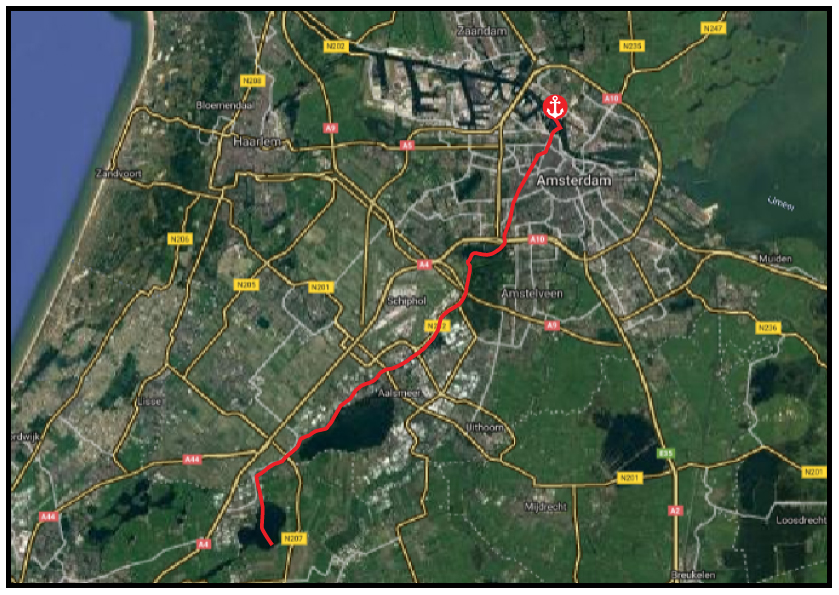
Anchorage Braassemermeer to Amsterdam: 18 nautical miles

We were rudely awakened this morning by a clashing sound, followed by the anchor alarm going off. Apparently we were dragging, so we jumped out of bed to check on the anchor. We had indeed been dragging, but fortunately not much. But the wind direction had shifted and a quick check on the weather forecast told us that the wind would turn 180 degrees and increase to wind force 5 when a thunderstorm would pass over. Yesterday when we checked the weather forecast the wind would continue to blow from the east, and although rain was predicted, nothing was said about thunder and lightning. Well, you know what they say, nothing as unpredictable as the weather. No wonder our anchor was dragging. It probably didn’t have any grip in the slushy peat bottom.

What shall we do now? Reset the anchor or continue to Amsterdam? The next stage would lead us to the Nieuwe Meer lock, the start of the nightly passage. But then we would have to leave within 15 minutes otherwise we would miss the bridge opening over the A9 motorway near Schiphol at 12.30 hours. We had planned to stay here for 2 or 3 days so we weren’t expecting to be faced with this decision right now. Choices, choices. And we had to decide quickly, because we were still dragging. And all that on an empty stomach and without a drop of coffee.

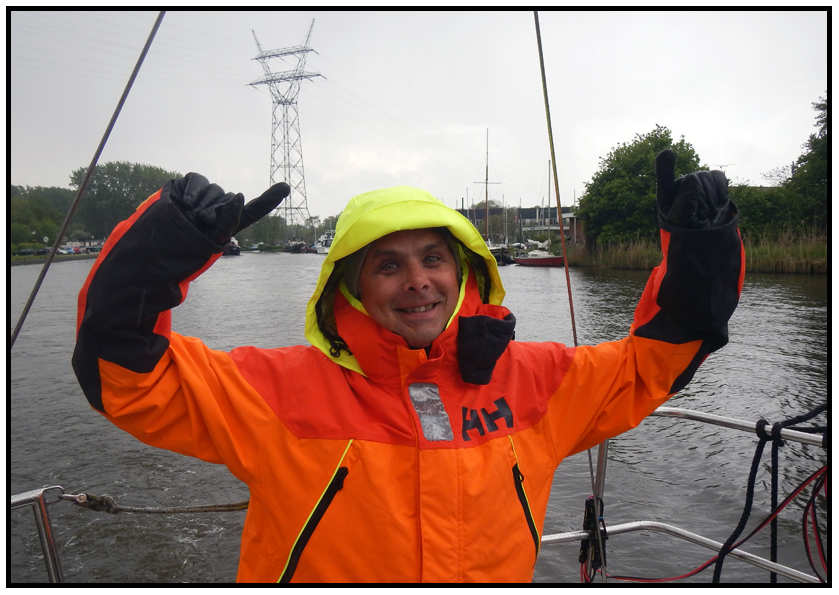
We made the decision to hoist the anchor and continue to Amsterdam. We quickly put on our sail gear -in the meantime it had already started to rain- pulled the anchor out of the sludge and continued to Amsterdam.

We past another big stretch of water, the Westeinderplassen. Initially we wanted to anchor there as well, but the whole lake is even more shallow than the Braassemermeer. And we didn’t feel like repeating yesterday’s close encounter with the ground again. But definitely a beautiful place to go to if you have a boat with less draft. This lake and the Braassemermeer, where we were yesterday, all used to be peat bogs. After they had dug out the peat these lakes with their tiny islands and small drainage canals were left. You can moor between the high reeds or at the tiny islands. But alas, not for us. Onward we went through the drizzling rain.

Suddenly the depth meter jumped from 2,5 to 1,4 meter! A submerged bump in the waterway! The boat lurched back and then catapulted forward like we were being launched over a ramp. These are truly the days of insufficient depths…

We made it in time for the bridge opening at the Schipholbruggen. These bridges only open 3 times a day due to the busy traffic, so you really don’t want to miss an opening. We even had 20 minutes to spare so we tied up to the waiting dock and made a cup of tea. After the bridges we entered the Nieuwe Meer. The idea to anchor here for a day or two before the night passage through Amsterdam, was cut short. According to the signs we weren’t allowed to anchor here anywhere. That meant we had to do the passage tonight, something we hadn’t anticipated. But as it seemed, nothing went according to plan the last few days. So we tied ourselves to the waiting dock, and tried to catch some sleep before the passage. 

Waiting for the bridges and lock to open at 23.56h

When we arrived at the waiting dock we had hailed the control center to state our intention to pass trough Amsterdam with the night convoy. We were given the instruction to listen to channel 69 for further instructions from 23.00h onwards, because the passage would start at 23.56h. Thus after a late dinner we waited for the instructions. But the channel stayed silent, so we hailed them again. Finally a response. The bridge opening would be at 23.55, so we had to be ready in front of the bridge at 23.50 because they had to open 2 motorway bridges and 3 train bridges in one go, which we had to pass within a few minutes. They would hail us for further information.

So we untied at 23.48 and drifted towards the bridge. Silence. Nothing to be heard on the VHF. Finally at 12.10 the bridge started to open and we could pass on to the lock that lies directly behind the 5 bridges.

In the lock we had a few minutes to fully appreciate that we had started our nightly adventure. We were rather nervous since we had never done a night passage before, let alone one through a city notorious for bicycles littering the canal floors, with 15 bridges and one lock.

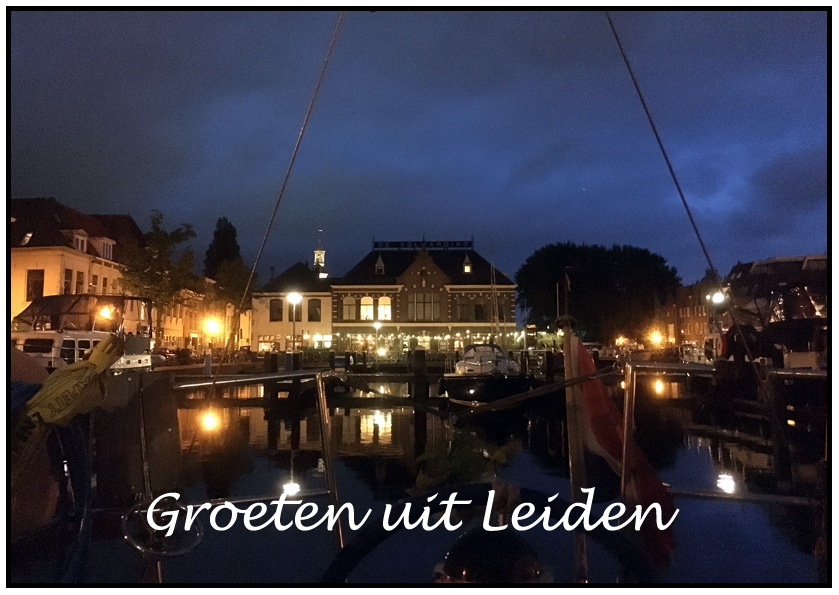
It was almost new moon, and when we left the lock it was pitch dark. Later on when we entered the inner city it became a lot brighter with all the street lighting, neon signs and illuminated windows. Slowly our nervosity subsided. It was actually all rather exiting. We were very much focused not to hit anything in the dark like the aforementioned submerged bicycles and to time our arrival at the bridges, but all in all we were able to enjoy the passage. Turned out the whole convoy was just us, and the bridges were operated remotely, so all alone we went through the dark canals of Amsterdam.
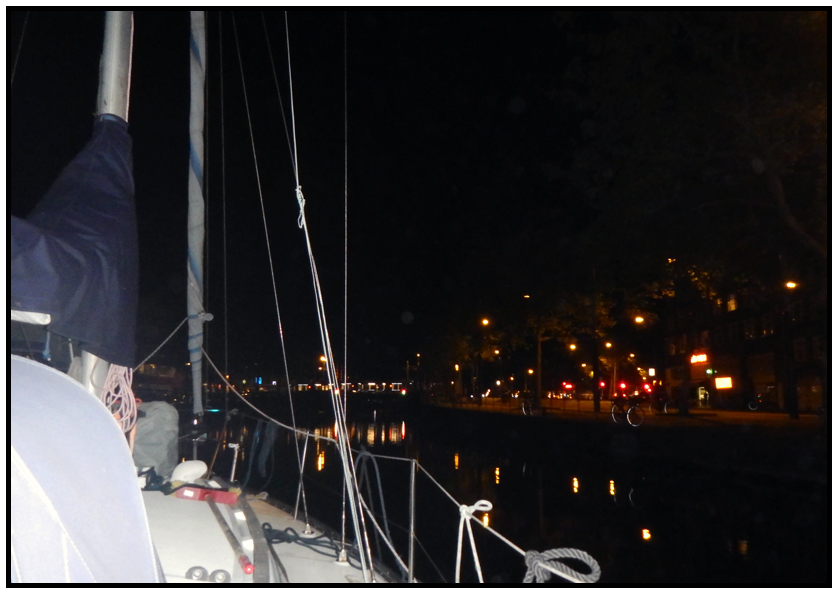
The nightly passage through Amsterdam

The 14th bridge was another rail bridge. We were supposed to hear the exact time of passage over the VHF, but there was only silence. After 15 minutes we hailed them, and were told that an opening would be arranged shortly. Shortly in Amsterdam apparently means something else than in the rest of the world, because we had to wait for another 20 minutes before the bridge opened.

One last bridge and then we entered the IJ canal, a broad water channel connecting the North Sea with the IJsselmeer. The marina where we were heading was on the other side of the canal, slightly to the left. Leaving all the bright city lights behind us, it became pitch dark again. There was a near miss with a lock pilar in the dark, and we had to maneuver around big wooden dolphins (sort of docking blocks sticking out the water). Normally they have white caps, but these didn’t, rendering them virtually invisible in the dark.

The IJ canal luckily wasn’t busy at all. We saw one other vessel in the distance, so we could safely cross to the other side and enter the marina.

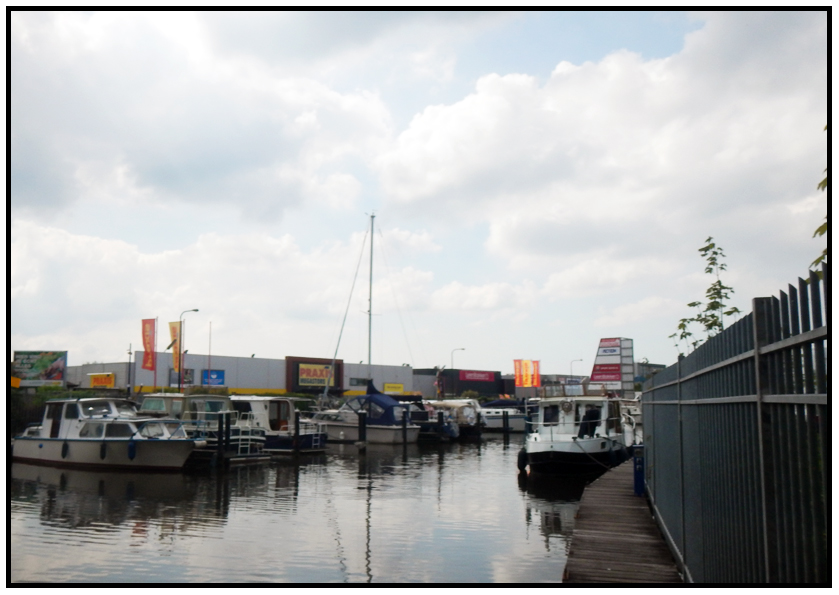
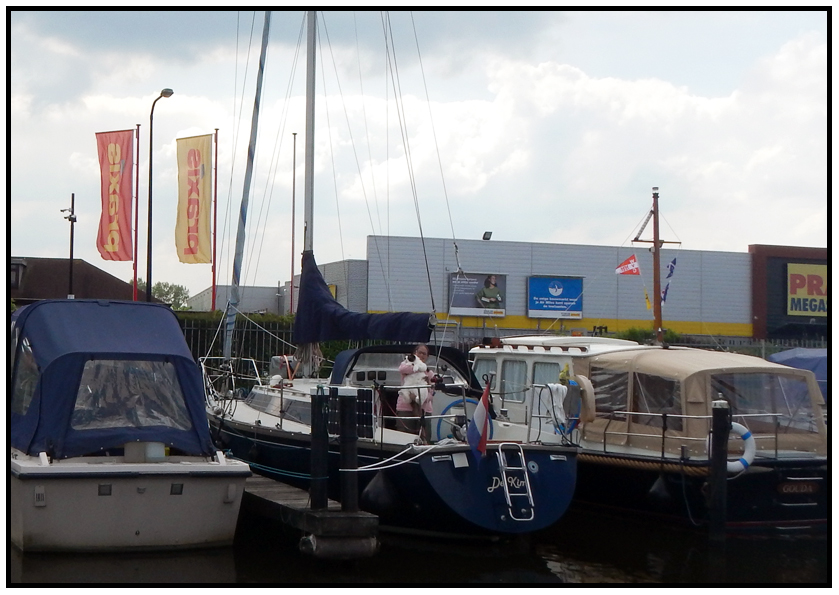
It wasn’t long before we were safely moored in Amsterdam marina. But it took a while before we could sleep with all the excitement of completing our first night passage.
Stuck in a peat bog

Anchoring at the Braassemermeer

May 7th 2019

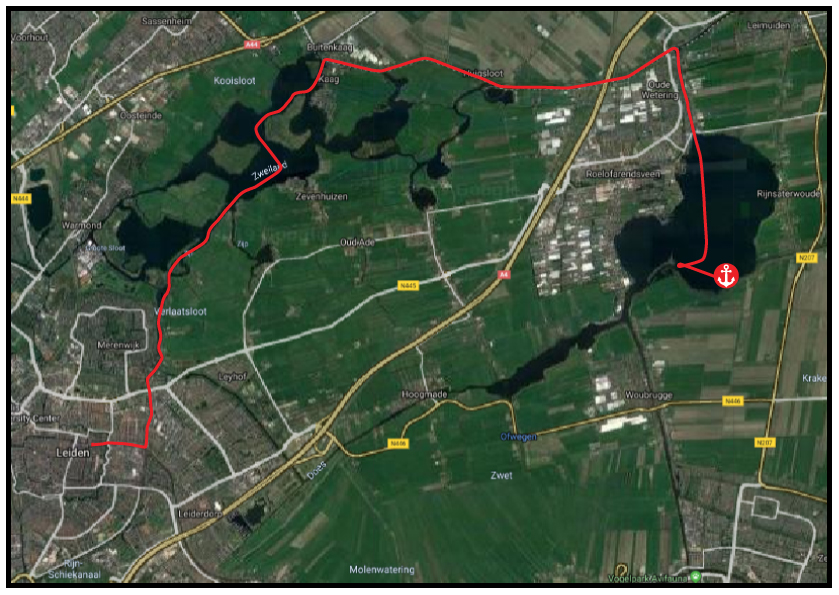
Leiden to anchorage Braassemermeer: 10,8 nautical miles

Today we really are leaving Leiden. It was raining, which was actually rather fitting because we had such a good time here. Not many bridges today, just six. And most of them we had already passed in Leiden. There used to be a time that the prospect of negotiating only one bridge would have caused a lot of stress. But now we’re already talking about ‘just six bridges’. It seems like we have learned a lot.

After Leiden we passed the Kager Plassen, a cluster of bigger and smaller lakes where Jeroen had learned to sail and windsurf many many years ago. It was quite shallow everywhere and the waterway wasn’t clearly indicated either, so we had to keep a close eye on the depth meter. At the end of the Kager Plassen you can choose to either go left to Haarlem or right to Amsterdam. And as decided yesterday, we went right.

The rain was starting to increase, but despite the rain it was actually a pleasant trip. The nice thing about smaller inland waterways and sparse traffic, is that there are hardly any waves, so we could make ourselves a steaming mug of tea along the way to keep warm.

Disco in the drizzle

We were heading for the Braassemermeer where we found a sheltered mooring spot surrounded with trees and a place to barbecue. Although it was still raining now, the sun would come out at the end of the afternoon. So we pictured ourselves sitting there enjoying the warmth of the fire in the fading sunlight. We saw the entrance to the mooring, and made sure to head straight for the middle of the opening, because we had read somewhere that it was a bit shallow to the sides. The middle part was supposed to be two meters deep, and our draft is 1 meter 73, so we should be okay. Nevertheless we again kept a close eye on the depth meter. 2 meters, 1 meter 90 …careful now, 1 meter 80 … okay, were still moving, 1 meter 70 …what? 1 meter 70? 1 meter 40! We’re stuck!! We frantically thrusted backwards and left to right, trying to wriggle free from the peat on the bottom of the lake. A few stressful minutes later we were free again, and quickly backed away. Apparently mooring here is not meant to be. 

We decided to find a spot on the leeward side of the lake to anchor. Well, leeward…. there was hardly any wind at all, making it actually more difficult than the last time when we had too much wind. In the first attempt we backed away too slow, causing the chain to fall on a big heap in the peat. When we hauled the chain and anchor in, it was coated in a thick and smelly layer of goo. Yuk. A second attempt. This time we gave more thrust when moving backwards, and that worked. 

Anchor watch app on, check landmarks and hope for the best. There was no significant current and next to no wind, so would probably stay put in the same spot without anchoring.

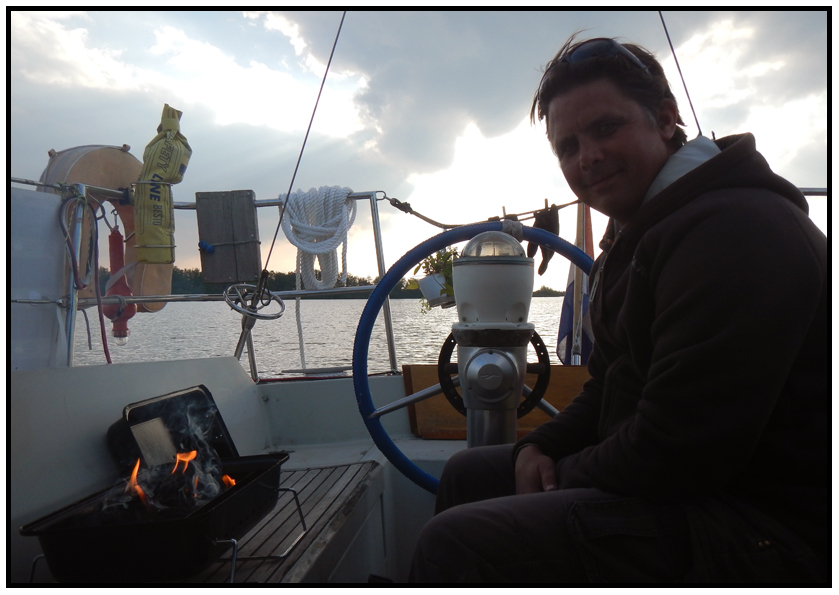
It is really beautiful and quiet here, you only hear birds singing. We spend a peaceful afternoon waiting for the rain to subside, watching the birds and enjoying the surroundings. We had planned to test the new barbecue this evening, but we were rather far from the shore. But with a few safety measures we managed to do it in the cockpit and had a wonderful dinner in the warm glow of the barbecue. And despite rain and the close encounter with the bottom of the lake, it had been a great day.

Barbecue on board

No early birds

Much too late to leave

May 6th 2019

Leiden by night

It turned out yesterday was not our last day in Leiden. Because were not sure which way to go yesterday and only decided early in the morning, we didn’t have much sleep and couldn’t get up early. Now we aren’t early birds anyway, so when we were up and about it was more approaching afternoon than that it was morning.

When we went to the marina office to return the key they told us that they wouldn’t operate the bridge during lunch break. That meant we had to wait until half past one. We followed their example and had lunch first before leaving, but when we were finished it was already after two.

Much too late to leave, so we collected the key for the sanitary building again, paid for another night and started planning tomorrow’s trip.

Funny, we both felt reluctant to leave, and were quite relieved when we had decided to stay another day. So it’s probably for the better. Before we left we were often given the advise to trust your instincts, and never to do something that doesn’t feel right. So we’re probably better off staying here today.

Liberation Day

May 5th 2019

Our last day in Leiden.

Food frenzy

Friends of ours who live in Leiden had just returned from a holiday to the UK yesterday. They came to collect us in the morning and after the kids had spend enough time petting Captain Fluffy we all had breakfast together outside in the sun.

The 5th of May is Liberation Day in the Netherlands, so the city was alive with festivities and music. We strolled through town, through all the little streets and alleys, and visited ‘De Burcht’, the old fortress of Leiden. After the festivities we had dinner at our friends’ place, and enjoyed the evening together.

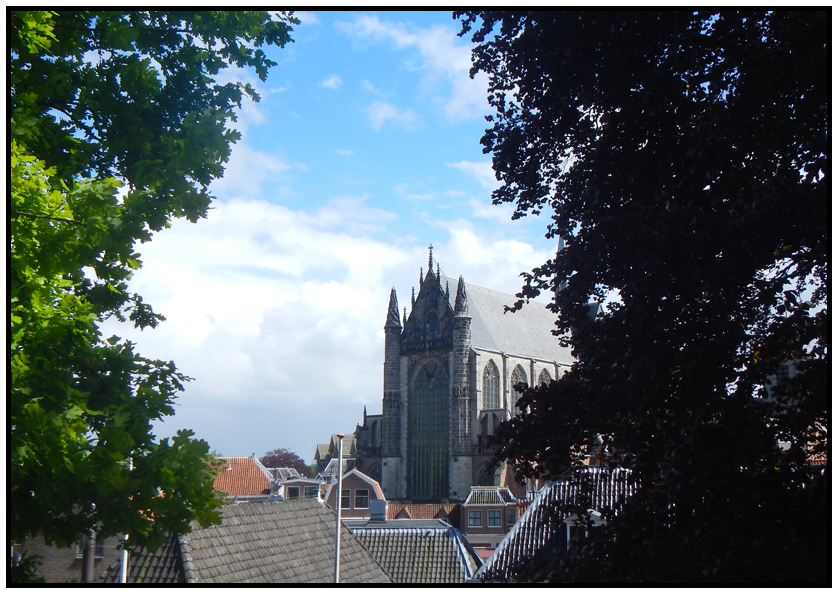
A view on the Hooglandse Kerk from the old fortress

When we were back on our boat late in the eventing, there was still the decision to be made either to go to Haarlem or Amsterdam. We were still not sure which one to choose. We kind of dreaded the nightly passage, but sailing in convoy the whole day and the tight schedule on which you had to pass through Haarlem didn’t sound too great either.

In the end we chose Amsterdam, because we could find more information about this route, and we didn’t fancy sailing in convoy the whole day and pay for it as well. And although we’ve never done a nightly passage before, one time has to be the first, hasn’t it?

Hailstones and rain

And delicious tomato soup

May 4th 2019

A dry moment to do groceries

Today we’re taking things slow. The hailstones and rain were creating a tantrum on the deck. Not a particularly fine day for outdoor activities, but a good day to get some work done. In between hailstorms we went out to get some groceries and Jeroen made his signature dish; a delicious roasted tomato soup. The perfect comfort food for the cold weather.

It was time to think about the next passage. After Leiden the ‘Staande mast route’ separates in two directions: we could either choose to go through Haarlem or through Amsterdam.

Both options have their advantages and disadvantages. The Amsterdam route is shorter, but you have to traverse the city in convoy by night. Haarlem meant sailing in convoy from Sassenheim -a town you pass through directly after Leiden- to the entrance of the North Sea canal after Haarlem. The convoy isn’t the problem as such, but it leaves early in the morning from Sassenheim because of the railroad bridges you have to negotiate. Because you start early in the morning the passage is during day time, but you have to pay for the passage through Haarlem.

But although we have bought a pilot for the Staande mast route and the many sources you can find online that provide information about this route, it’s rather annoying that none of them are conclusive and many sources are downright confusing or provide false information. It’s hard to find exact times for crucial bridge openings, maps of the inner city waterways of Haarlem and Amsterdam, how the convoy works, and who to contact if you have questions. There is particularly sparse information on the Haarlem route.

After much deliberation we were still not sure which one to choose, so we decided to make a decision tomorrow evening.

The art of moss gardens

Things hidden in plain sight

May 3rd 2019

Create your own moss garden!

This morning we went to Siebold house, a museum dedicated to Japan. The founder of the museum, Philipp Franz von Siebold (1796-1866), used to be a physician in Dejima, a Dutch trade outpost in the early 19th century near Nagasaki in Japan. In those days Japan was closed for foreigners. They couldn’t enter or travel through the country. The Dutch were the only foreigners allowed to trade with the Japanese. But they weren’t allowed to leave the small island, save only for a happy few that were invited to court in Edo, the former capital of Japan, to honor the emperor. Siebold was allowed to travel to Edo, but was secretly entrusted with another objective by his superiors; to obtain as much intelligence as possible on that mysterious country. In Edo he obtained several maps of Japan, which was strictly forbidden that time. When the Japanese found out he was in possession of the maps, he was convicted of high treason and banished from Japan. But he didn’t leave the country without all his prized belongings. Illegally. The museum was his house where he used to display the objects and artifacts he brought with him from Japan. 

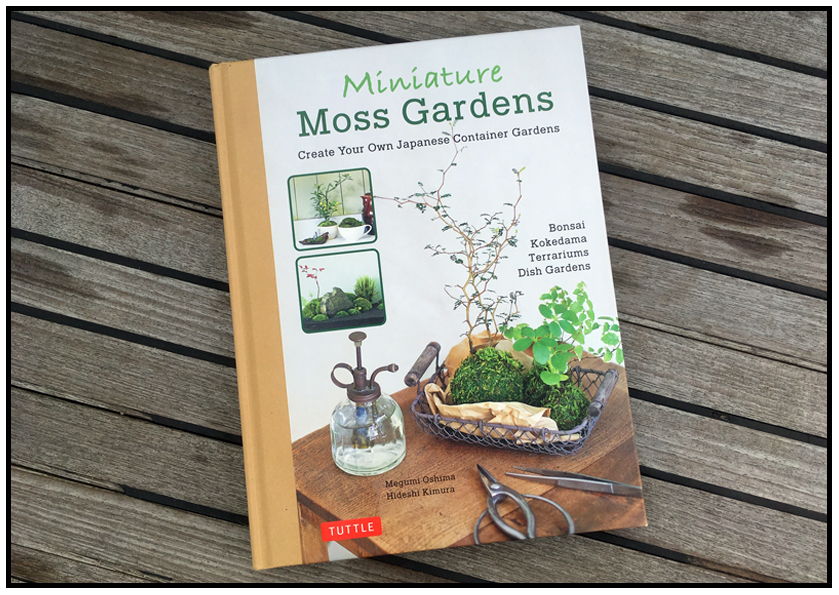
We used to come here often but haven’t been here for a while, so it was fascinating to see the intricate works of art on display again. They also have quite a large bookshop dedicated to all things Japanese. Although we already have too many books aboard, we bought a book on how to make moss gardens. Making moss gardens seems to be an ancient in art form in Japan and to have developed from the art of making Bonsai trees. It was so peculiar we just couldn’t resist.

Jeroen’s mother came to visit later that day. Together we took a walk through town in search for a restaurant to have dinner together. The weird thing about traveling is that you start to see things that normally you would just walk past. We’ve been here often, Jeroen even lived here for many years, and nevertheless we saw things today that we hadn’t noticed before. Maybe it’s because you’re not rushing from A to B, but just take your time to soak up everything that you start noticing things hidden in plain sight.

Hooglandse Kerk: We’ve past this church many times, and never looked up…

No children?

Making soap

May 2nd 2019

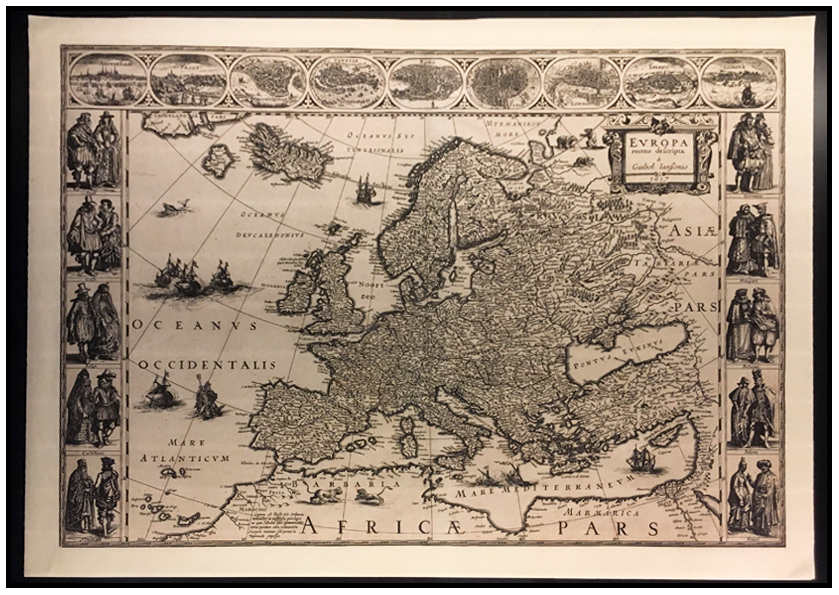
It would be something else to sail only with the aid of these charts as seen at the Boerhaave Museum

We woke up with rain today, and it kept on raining the whole morning. In between rain showers we went to the sanitary building for a shower. The sanitary building is actually the old harbour office. Funny, from the outside it doesn’t look like it’s being used as a place to shower, just like a monument of sorts.

We made use of the rainy morning to get some work done. In between traveling and exploring sometimes work tends to be forgotten, we’re trying to get into the habit to work while it rains.

When it cleared up in the afternoon we went to museum Boerhaave, a museum dedicated to science and medicine. It’s named after Herman Boerhaave, a renowned physician and botanist from the 17th century. The museum contains a remake of an anatomical theatre, and many other historical scientific instruments. 

Today you could also join a workshop to learn how to make soap. We saw it being advertised when we came here, but we couldn’t find the place inside the museum where the workshop was being held. Suddenly we smelled soapy fragrances, so we followed our nose to the source of the smell. The smell originated from a space crawling with children, with a few forlorn adults, probably the parents as statues in the bustling sea of small people. Apparently the workshop was intended for children. But we wanted to make soap too, so we sat down at an empty table and tried to figure out how we could get started. An museum employee came to us and asked with how many we were, because he needed to melt the soap for us. “Just the two of us” we said. “Two? No children?” He was obviously confused that two adults wanted to join the workshop. We said something along the lines of releasing the inner child after which he recovered from his shock and enthusiastically started to explain everything in detail.

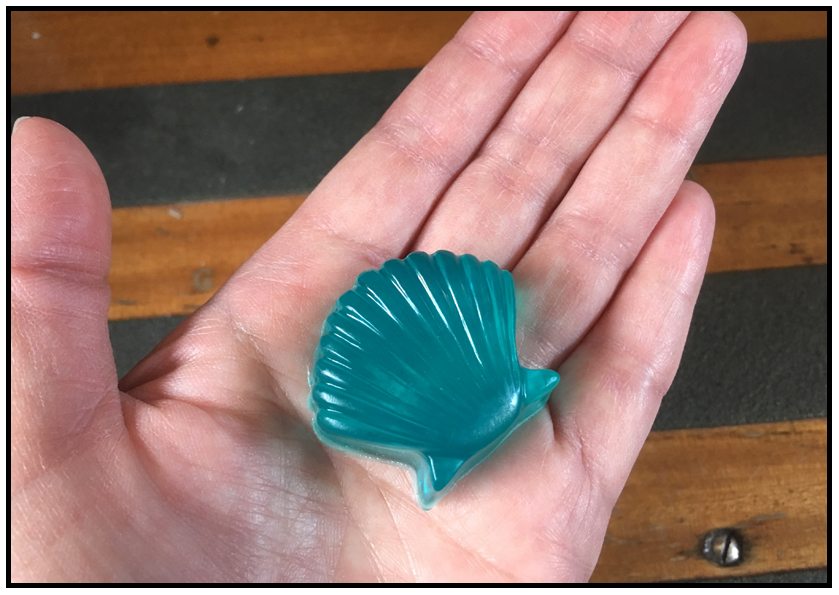
We received a small glass jug with molten soap to which we could add a few drops of color and fragrance. The aromatized liquid soap then had to be poured into small molds, and the whole thing needed to set for about 20 minutes. Although not exactly complicated is was a lot of fun to do. A couple with their two children joined our table. The father asked us what they were supposed to do, and we explained that they could select a color and a fragrance, and that the museum employee would be with them shortly for the soap. So the children and the father had already selected a fragrance when the guy from the museum came again. “How many people? he asked, then looking at us he asked the parents “You too?” The mother didn’t respond at all, she was zoned out, but the father said in a very grownup tone. “Well, it is for the kids isn’t it?” The museum guy left again an came back with 2 jugs which he gave to the children. The father looked greatly disappointed, but said nothing. “Where is your jug?” asked his daughter. “I didn’t get any” he said looking crestfallen. “Then go and ask him if you also can get one” she said. “No, it’s okay” the father said trying to hide his disappointment. So funny, it’s so not done to act out of character, like joining in a children’s workshop (although we checked later, it actually said nowhere that it was only for children). The reaction of the museum guy was hilarious, as was the disappointed father who didn’t dare to admit that he wanted to make soap too. When we later plopped the little soaps out of their molds and left the father glumly wished us much joy with them…

One of the little soaps we made

The day of the bridges

Plus one uncharted bonus bridge

May 1st 2019

Gouda to Leiden: 16,5 nautical miles

Jeroen was feeling better so we left Gouda and set course for Leiden. Maneuvering out of the narrow box was a bit of a challenge, especially since the water depth was the same as the depth of our keel. Luckily we didn’t get stuck and within a few minutes we were on our way towards the first bridge. 

This is going to be the day of the bridges. We are going to encounter 17 bridges on our route today, amongst them 3 train bridges. And these take some planning, because they only open a few times a day at set times for a few minutes before the next train will rush over. In this densely populated part of the Netherlands a train runs every 5 minutes, so the time window you have to pass is often less than that.

Incidentally the first two bridges in Gouda we had to cross were train bridges. But we had planned our departure time so we only had to wait 10 minutes until the opening, so we patiently moored at the waiting dock. Another sailboat was waiting there already. It was brand new, big and shiny and also a good deal faster than us because it sped forward after the bridge opened and was soon out of sight. 

In convoy to Alpen aan de Rijn

We passed a motorboat in the next stretch of the canal, adorned with flowers in cases and lots of potted plants, leisurely bobbing along and enjoying the scenery. At first we tried to keep up with the other sailboat so we could use the same bridge opening, but they were so fast that we soon gave up and plodded along on a more agreeable pace. 

When the next bridge came in sight we saw that the other sailboat had already arrived there and heard them hailing the bridge over the VHF, asking them for an opening. Now unlike a telephone a vhf is ‘on’ all the time. You use certain channels for certain purposes or areas. If you want to talk you press the ‘push to talk’ button on the VHF and everyone else listening to that channel can hear you. So we heard the other sailboat requesting an opening. We also heard the reply. “Sure”, the bridge master said. “As soon as that other sailboat and the motorboat have arrived here too. And make sure you stick together, so we can let you all through at the same time and keep the openings nice and short.” The bridges here are 10 to 15 minutes apart, all operated remotely by the same traffic center. Therefor they know that this cluster of boats is in this specific part of the canal. So the other sailboat had to slow down to our speed, or actually to the speed of the motorboat who was even slower, which they didn’t like.

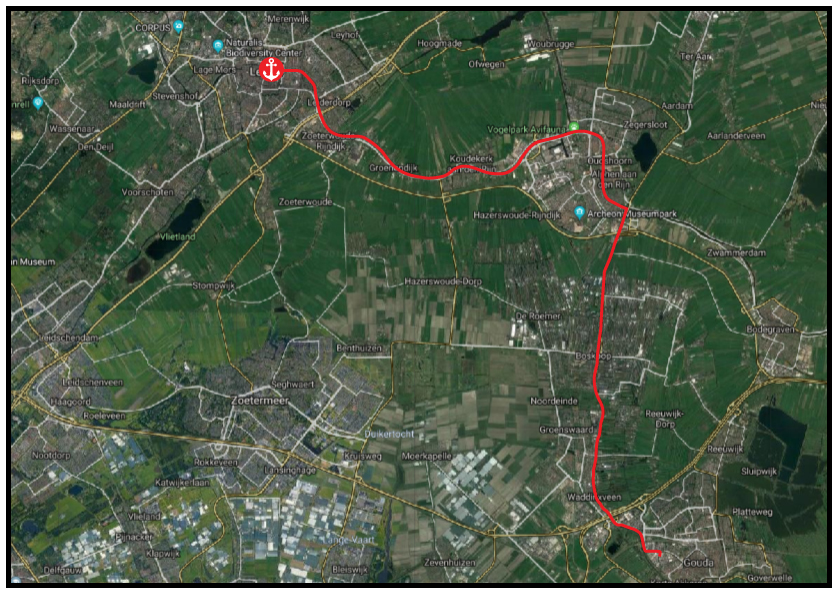
Our route took us trough the Gouwe canal and the river the Old Rhine. We passed through the city of Alphen aan de Rijn, and underneath the Juliana bridge. This particular bridge was going to be renovated in 2015. Two big cranes were positioned on a floating pontoon in the canal to lift the new deck in place. But during the placement something went wrong. Although it is still not clear what had happened exactly, on footage you can see the cranes starting to slip from the pontoon, and the two cranes plus bridge deck came crashing down on the city center. It was a small miracle that no one was injured or killed, only one dog lost its life. Four houses and buildings were completely destroyed, seventeen houses and building were so severely damaged that they had become inhospitable. And much more were less severely damaged, but had taken a fair beating. Knowing this makes it a bit ominous to pass underneath something that has caused so much havoc.

When we left Alphen aan de Rijn we encountered a bridge that wasn’t on the map. Quick research showed that this bridge called the Queen Maxima bridge has been standing here for two years now. And that’s weird, we’ve just bought a new Navionics map so it should be on there. But it isn’t. Okay, not 17 but 18 bridges to pass now.

We had to press on a bit, because one of the bridges just before Leiden closes from 4 to 7 during rush hour for pleasure crafts. We arrived just in time, at 5 minutes to 4. The bridge master was quite amused that we had made it just in time, giving him the opportunity to tease the already accumulating traffic that went over the bridge one last time before the rush hour break. 

And then we were in Leiden. Leiden, like Gouda, is a city laced with canals and is one of the oldest cities with city rights in The Netherlands. Leiden has the oldest university in The Netherlands and was home to Rembrandt, the famous painter. 

Just two more bridges to pass to reach the marina. When the bridge opened we had to move aside to let a big transport ship trough. That is when we saw only 1,50 meters on the depth meter! It was so shallow that we were ploughing through the mud. Quickly we gave more throttle to get unstuck, thick clouds of mud billowing up in the water.

After passing the last two bridges we moored in the Passantenhaven, a municipality marina in the middle of the city. The harbour masters we’re delighted that Jeroen grew up in Leiden, so we had an animated talk with them.

We went for a short walk through the inner city, which turned into a walk through memory lane. It’s weird to be in a place that you have known so well, as part of a journey through the unknown.

When we got back to the boat we were surprised with an unexpected visit from a friend who knew that we were arriving in Leiden late in the afternoon. We had dinner together, and shared an enjoyable evening talking about future sailing plans. He sails as well and is planning to sail solo to Denmark in August, so maybe we can meet up there!

Garbage bags on pegs

Weird sights and other tourist attractions

April 30th 2019

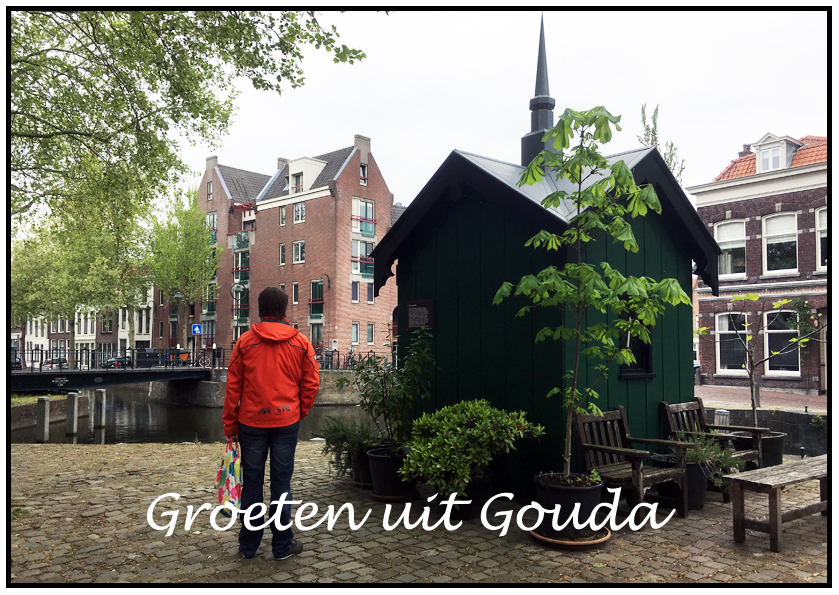
The old bridge toll house

Today we set out to explore the city of Gouda. Although not far from The Hague where we used to live, we have actually never been here before. Other cities similar to Gouda like Delft and Leiden are really nice, so we had high expectations. 

Gouda is famous for its cheese and the cheese market. But although the cheese is called ‘Goudse kaas’ the cheese isn’t actually made there. Artisan Goudse kaas is made in towns like Stolwijk and Haastrecht, but most of the Goudse Kaas is mass produced and factory made. Until recently the name wasn’t even protected. Since 2010 the indication Gouda Holland is marked as a geographical denomination. But it still doesn’t mean made in Gouda. It only indicates that it’s made in The Netherlands with Dutch cow’s milk.

Hoping to see a glimpse of the cheese market we went for a walk to the city centre. We admired the historical architecture, but the people we encountered on our way were less cheerful. Similar to the Schilderswijk, a part of The Hague where we used to live, there was an apprehensive atmosphere. People looked sullen, grumpy, actually the only people we saw that were laughing, were the other tourists. Maybe it is because Gouda is such a tourist attraction. Everything seems to revolve around the tourists. The cheese market – which wouldn’t take place today – isn’t the place where cheese is sold and bought anymore, it’s more a staged performance. It looks like all the historical buildings are turned into theme parks and there are signs and explanations at every stone and wall to explain what either is, was, or could have been there. Gouda is really cashing on all its historical features. So maybe people here are fed up with all the tourists.

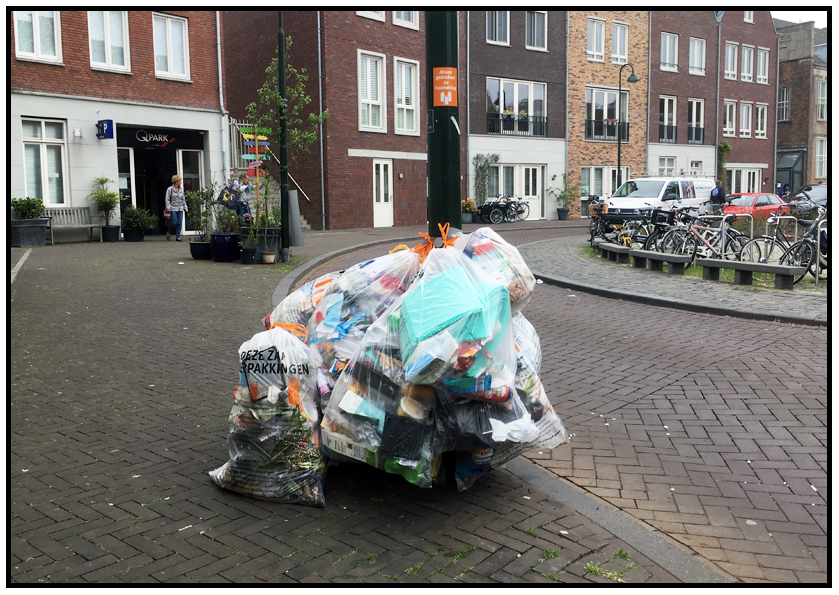
A bit disappointed we returned to the boat. On the way back we noticed the way people offer their garbage here. There are rings with pegs attached to poles and street lamps and such. And people hang their garbage bags on those pegs. Weird.

Not enough pegs for that one garbage bag

But whether we like the city or not, we might have to stay a bit longer. It looks like Jeroen is coming down with the flu.

Perpetual cruising

What it’s like to be constantly on the move

April 29th 2019

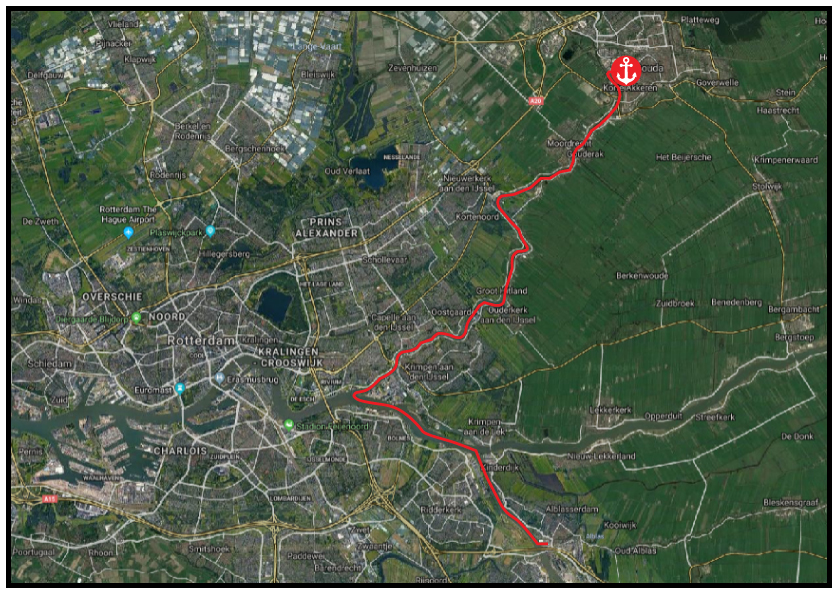
Alblasserdam to Gouda: 16,4 nautical miles

Today we’re leaving Alblasserdam. After getting the boat ready to leave we called the bridge master to ask him if he would be so kind to open the bridge at the marina entrance for us. No answer… oh yes of course, this was the town where phones aren’t picked up. But since we really wanted to leave, we called again. And again. And left a voicemail message. Eventually we decided to walk there to find out what was happening.

There was an elderly man at the bridge house, pacing back and forth, newspaper and glasses laid abandoned on a table. He was apparently waiting for something to happen. “Are you the bridge master? Asked Jeroen. “Yes I am, how can I help you?” Jeroen asked him why he didn’t answer the phone. “Phone?” He said. “ I haven’t heard anything. Are you sure you’ve called the right number?” When Jeroen said he was sure that he had, because we dialed we same number yesterday, he called the bridge number with his own phone. The sound of the phone was hardly audible although a blue light was flashing on and off, signaling that someone was calling.“Oh, the volume must be set really low.” So he checked the phone and there were indeed several missed calls.

He didn’t knew how to adjust the volume, and said he had to wait for a technical assistant to do it for him. Jeroen volunteered to help him out. “Oh, do you know how to do that?” Asked the man in wonder. After adjusting the volume the bridge master said “Shall I open the bridge now?”. We explained that we first needed to get back to the boat and then start the engine and maneuver out of the box before we even got to the bridge, so it might take a little while. Fifteen minutes later the bridge was up and we were finally on our way, the bridge master waving happily when we passed.

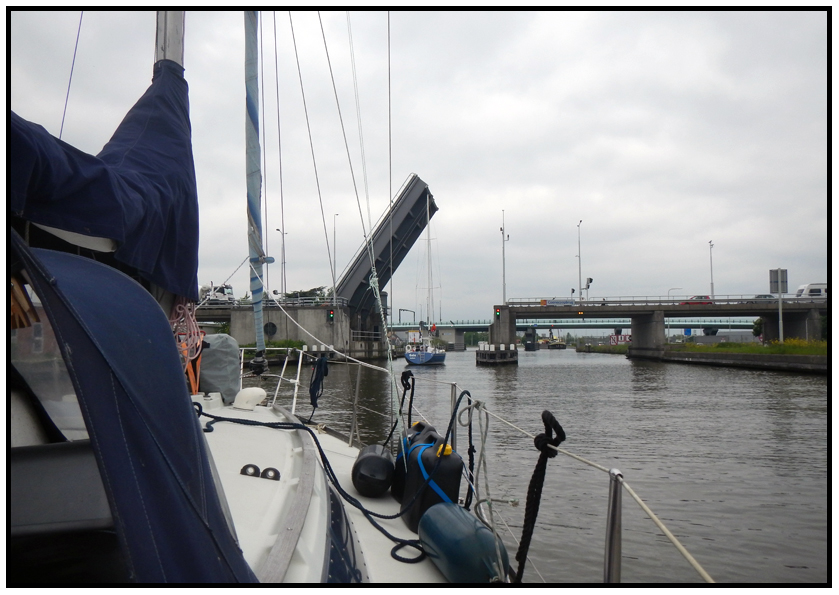
A nice day again. But next to no wind and in an unfavorable direction anyway. And you aren’t allowed to tack on these waters due to the busy traffic anyway, so no sailing today. A few miles further we had to pass the next bridge. The Algera bridge and lock are actually the first completed part of the Delta works, an extensive operation that was designed to protect the Netherlands from extreme high tides and storm surges. The lock only closes if the water level is too high to protect the lower lands beyond, so we only had to negotiate the bridge. Most bridges in this traffic dense area open only a few times a day on set times for pleasure crafts. Because we came 5 minutes late and just missed the opening for the Algera bridge, we had to wait for another hour. No problem, we’ll just fasten ourselves at the waiting dock and have a cup of tea and a sandwich while we wait. We had just moored when we saw traffic on the road ahead coming to a standstill. A containership was approaching and requested an opening; they don’t have to wait. We hailed the bridge if we could tag along, and we could. The sandwiches need to wait.

Behind the bridge lies the Hollandse IJssel, a beautiful meandering river with little towns and small ferries, speeding from one side of the river to the other. Apparently they are very wealthy little towns, because most houses had their own boat lifts. There was not much traffic on the river. We passed a few containerships and other yachts going in the opposite direction, but for the most part it was just us calmly bobbing along. All in all very agreeable.

After a pleasant passage we approached Gouda, where we had to pass through the Juliana lock and two bridges, all operated at the same time. We shared the lock with only a jet ski so we had plenty of space and soon we were coming out on the other side.

Marina W.V. Gouda is situated in the center of Gouda. We were welcomed by a really helpful harbour master who navigated us through the narrow -and to our concern very shallow- harbour and helped us dock. Quite a tight fit here, the marina seems to be more suited for motorboats, which most of the other boats indeed were. 

We’re the only sailboat in the marina

We now start to realize that every day is different and that it takes some time getting used to. As Jeroen’s mother said “Every day you have to solve new problems.” The routines are the same: preparing the route, navigating, docking, finding shore power. But the execution of such a process is completely different. Something is simple as coming home for instance becomes quite complicated. Normally when you get home, even when we were already living on the boat, you park the car in its usual spot, open the door, take off your jacket, flap down on the couch and you’re home. But now you enter a marina you haven’t been to before, so you have no idea what the layout of the place is. Often you don’t even know which slip you have to go to until you sail into the marina, and the harbour master calls out the number of the slip which you then have to find. Then you have to dock, and you don’t know what the slip looks like until you approach it. Only then you know how to maneuver into it and where to tie the lines. After you’ve fastened yourself, you have to walk to the harbour master, pay the fee, get codes or keys for gates, doors and WiFi and sometimes tokens or badges for showers, water and electricity. When you get back to the boat you have to find the socket, connect shore power, tidy up all the sail gear, move all the stuff you have secured from sail-mode (tied down or lodged somewhere to prevent the items from falling during the passage) to live-mode and only then you’re finally ‘home’. Coming home takes at least an hour in stead of a few minutes.

Everyday you open the hatch it looks different. Sounds are different, even the light is different. I guess we’re starting to feel the impact that perpetual cruising has on us. It feels different than a vacation, probably because there’s not really a deadline to return home. Our boat technically being our house makes it all the more confusing. During a vacation you tend to put up with things you normally wouldn’t, because it’s only for a few weeks. But now we’ll be gone a few months, and then it becomes impossible to be ‘on’ the whole time. Time to unwind and rest are more important. But although it can get rather stressful at times, overall it’s still quite exiting in a positive way. 

We’re docked now, paid the fee and collected codes and keys so now it’s time to relax. Tomorrow we’re going to check out the city.

Carmen and Captain Fluffy
Our journey to Gouda