Today the mechanic came to inspect our work on the morse cable. After a thorough examination he concluded that we had done an excellent job. Jay!
And the restaurant was open again (during low season it is only open from Friday to Sunday) so we celebrated by having dinner there. The owner of the restaurant still remembered us from when we bought the boat. They too live on a boat, and like to go on extensive trips with their camper van, so she was curious to learn of our plans for the upcoming trip.
Tonight was ‘Harbour night’ here in Noordschans, a monthly get-together for all the regular berth holders organized in the restaurant. This evening they invited someone to talk about fire prevention and the workings of all the different fire extinguishers aboard boats. It turned out to be not only a tasty but also a very educational dinner. Interesting facts we learned: a regular powder extinguisher (ABC extinguisher) only spurts for 15 seconds. So you better have a steady aim…
And some boats have a capped hole in the staircase, which can be used to aim the mouth of the extinguisher through in case of fire in the engine compartment. That way you won’t have to open the engine compartment, allowing more oxygen to enter the space, aggravating the fire.
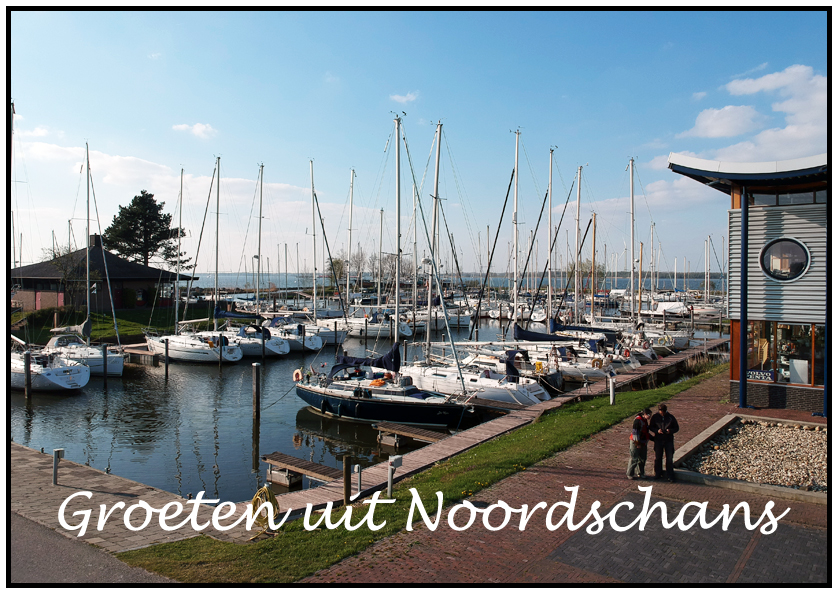
It has been nice here in Noordschans, the people here are all very friendly and make time to help you. It also felt rather special because we bought our boat here and tomorrow this is the place where our adventure will really start.
Day 3 of our transmission cable episode. Nothing to be found on the internet about how it exactly works, so how to know if we’ve installed it correctly? We only found some cryptic mentions like “it needs to fold open equally on both sides.” What does it mean?? Nothing to it but to wait until the mechanic has time to check our handiwork.
Although the Morse cable project is on hold, we got lot of other chores done today. We’ve fixed the contact for the auto pilot, added the mandatory extra hose clamps on the through hole hoses and installed an extra fire extinguisher (all necessary for the insurance). We’ve already dubbed this adventure the tinkering trip…
We concluded the day with a well deserved glass of wine, some cheese and dried sausages in the cockpit. This feels like a proper vacation!
Disconnecting the morse cable and connecting new fuses.
Captain Fluffy, our helping hand.
April 9th 2019
We spend the remainder of yesterday afternoon and a good deal of this day to figure out how to pry the Morse cable loose. We found out that both ends are held in place by a split pin or cotter pin. Thing is, it looks like it isn’t supposed to by pried loose. You can reach the one that is connected to the transmission, but the end that is connected to the Morse throttle control is almost unreachable. There is only 5 mm space to reach behind with a pair of very small pliers to unfold the split pin.
After a lot of wriggling, cursing and desperation, the split pin finally came loose. Now we could determine the length of the cable and buy a new one at the marine store. We also ordered a prop shaft grease pump which they didn’t have in store anymore. According to the mechanic it was something that needed to be done as well.
The fun side of boat work -especially if you live on the boat- is that with every job you have to do, before you can even start, you have to reorganize the whole content of your boat. In this case everything had to be removed from the quarter berth for the end of the morse cable that is attached to the morse lever, and the complete cockpit locker had to be emptied to reach the end that is attached to the transmission. The space in a boat is limited, so you have to stack everything somewhere else, on the couch for instance which means you can’t sit anymore. And at the end of the day, even if you’re not finished, you have to put everything back, just to take it out again tomorrow to continue. Captain Fluffy is the only one who enjoys this daily workout…
We also test started the engine today, and it failed again. So although the day was almost over we decided to dive into the faulty wires. After a thorough inspection we concluded that not only the connector was corroded, the whole fuse it was connected to and the wire running to and from it were totally green and needed dire replacement. So we cut away the corroded wire and replaced the fuse. Turn the key and…Vroooom! It started in an instant. Success!
We always knew we had to give our engine compartment some tender love and care, especially the whole electric circuit. We have always found excuses and postponed it because the engine felt like a looming, growling, unfamiliar creature, something to keep a respectful distance from. It really helped to have an expert to examining it and that he clearly explained what he was doing. It’s still a big slightly unfamiliar creature, but less threatening now and with a lot less growl.
This morning the diesel heater started without complaints, so it probably was due to the heat in the engine compartment that it wouldn’t start yesterday.
Despite gloomy forecasts the day turned out to be nice and warm again. The morning was quite relaxed, and we had a superb lunch of confit de canard in the cockpit. After lunch the mechanic found the time to service our engine and turned it into a crash course in Diesel engines. Since we are complete novices and want to prevent another ‘eventful day’ on the water we paid close attention to what he explained.
We learned to change the oil and oil filter, how to change the fuel filters, how to clean the air filters if necessary and the correct way to measure the oil level. We also learned that we shouldn’t have waited much longer with servicing the engine; there was a big tear in the impeller and there was almost no oil left in the transmission. The malfunction yesterday was indeed caused by a rusty contact, so he changed that as well. Later on he took us to the workshop where he explained everything we couldn’t see properly when he was working on our engine with a demo model. We’re really grateful for this crash course, it helped a lot. Especially because the engine in our boat is so boxed in that with some of the jobs you can’t see what you’re doing, and you have to rely on touch.
He also explained how we could start our engine manually if we were in dire need. Our boat came with a hand crank. We have tried it, we turned the crank until our arms fell off, but nothing happened. So we de-rusted it, painted it again and stacked it neatly far far away.
The trick is to open the levers for the compression chambers, so that there’s no compression. Then you start swiveling, and once you have gained momentum you quickly close the levers and -hopefully- you’ll get a spark. In theory that is.
Our mechanic also discovered that the Morse cable , the remote control cable for the transmission, was almost worn through. Something that needed immediate replacement. He didn’t have time this week to do it, not because it’s a difficult job, only a very fiddly one. So he thought that we might be capable of replacing it ourselves, and he would come and check later in the week if we had done it correctly.
No time to relax anymore, how to get the freakin’ thing loose?
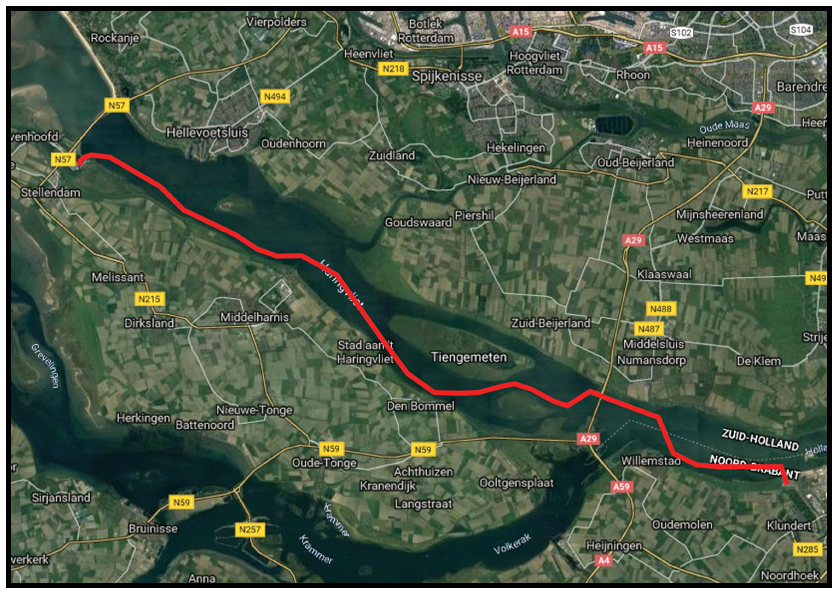
Today is the big day. We’re leaving the safety of marina Stellendam, and sail towards the unknown. The last checks, the last goodbyes, make sure everything is tied down, and then it is finally time to untie the lines!
First stop is the Marina of Noordschans. 2 years ago we bought our boat there and their yacht service specializes in Volvo Penta engines, which we have in our boat. We wanted to give our engine a thorough service before we sail north and Noordschans is actually on the way. Perfect combination!
It’s quite unreal to sail away from the marina knowing that you’re now really a nomad. Even more because the landscape is still so familiar.
The weather is amazing: although still a bit hazy it was 20 degrees Celsius, a day for shorts and t-shirts. But no wind. Suddenly the wind picked up, a perfect light breeze for sailing. Quickly we hoisted the sails but just as sudden as it started, the wind died again. Alas, back to motoring, let’s start the engine.
But the engine wouldn’t start…
Luckily the main sail was still up enabling us to slowly sail on with one knot of speed, and kept us from being fully adrift. But what was wrong with the engine? It couldn’t be the batteries. We had just installed a battery monitor and that indicated we had enough juice. We had just filled the diesel tank, so that couldn’t be the problem either. What then? The lights in the control panel for the engine wouldn’t light up when we turned the key to start, indicating that there might be a problem with the electronics. Where are the tools? Of course they are in the back of the quarter berth behind a pile of stuff we had so skillfully stowed away yesterday. Let’s start digging then…
Meanwhile we were slowly but steadily sailed towards a narrow stretch of water with a lot of hazardous shallows. Captain Fluffy remained fast asleep through all the commotion, which was actually quite calming. What is the worst that could happen? We might have to drop an anchor and spend the whole day searching for the cause of the trouble. And if we can’t find it we could always call the coast guards.
That really helped to see things in perspective thus methodically Jeroen checked every wire and connector if there was any electric current running through them. After an hour of searching he finally found the culprit. One of the connectors was totally eroded. Bit of scraping and wriggling and..VROOOM! Just in time, we were approaching the shallows.
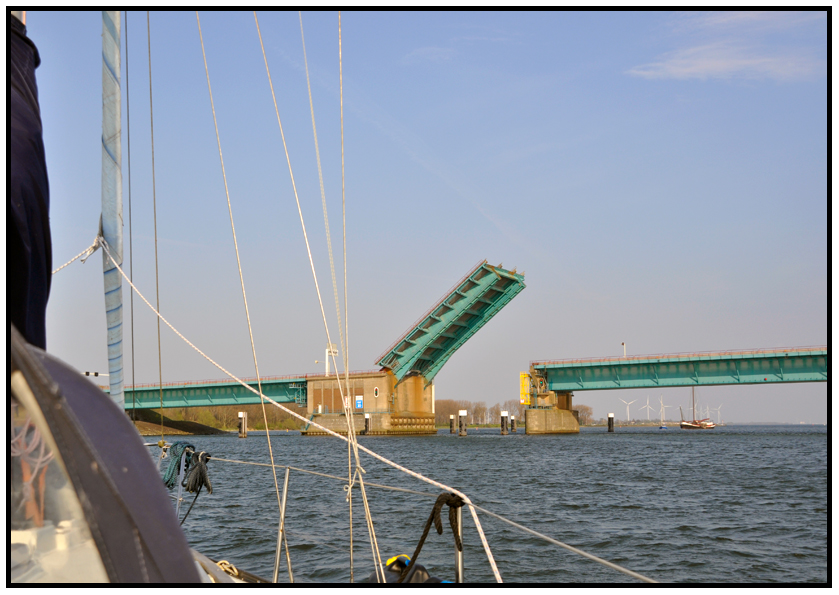
Due to all the commotion we missed the bridge opening and had to tread water for nearly an hour before the bridge would open again and we could continue our journey. Oh well, time to relax after the stress of a failing engine.
Waiting for the Haringvliet bridge to open.
Eight hours after we left Stellendam we finally entered the marina of Noordschans. We had called them earlier to ask which slip we could dock. “If you sail towards the crane there are three empty slips on your left hand, it’s quite obvious when you see it. Just choose one”. But when we entered the marina we were confused. There are two cranes and in each case there were 3 empty slips on the left. We went for the first option, but it was a tight fit and quite far from the workshop. And since our engine was going to be serviced tomorrow it seemed not likely to ask us to dock here. So when we were safely docked, we got off the boat and checked out the other option. Seeing the other slip up close it was clear we had chosen the wrong one. Back to the boat then to move it to its proper slip.
All in all an hour later than when we arrived in the marina were finally moored. We met the owner of the marina on the dock. He said: “That’s a familiar boat!”. “Yes that’s right” we said, “We bought her here two and a half years ago, and now we’re back to service the engine before we go on a big trip”. “Engine service for a Dufour 31?” he said. “I know nothing of a service for a Dufour 31, and I schedule them. Are you sure?”. Oh no…we had made the appointment with one of his employees last week, surely she must have written down the appointment somewhere? But before we could explain he added, “But it’s not a problem, we can fit her in somewhere this week, probably tomorrow”.
Finally time to settle down an prepare something to eat. We have shore power here, don’t we? Indeed there was shore power, but slightly further away than our cable was long. Where is the electric power cord reel? Of course, it is stowed in the back of the quarter berth as well. Time to dig again.
In the meantime let’s heat up the diesel heater. Hmm, it won’t start. A fault code? What does it read? Sensor overheated? Well that could be plausible, the sensor is in the engine compartment and since the motor has been running for about 8 hours -minus the part where it wouldn’t start- the sensor might be under the impression that it is too hot. Well, since it has been a warm day and the engine is indeed still emanating a lot of warmth, let’s see if it will start again in the morning. We’ll just make dinner and we’ll probably go to sleep soon after we’ve finished eating anyway.
When we finally sat down for a late dinner the bilge pump started to pump. It runs automatically, so there’s probably some water accumulating there. But 5 minutes later it started again. And then 2 minutes later. And again. And again. And then it wouldn’t stop anymore…
How to deal with a bilge pump that is going berserk? Could we have a severe leak? No, it didn’t seem like there was a severe leak. Is there something wrong with the wiring? No, no problems there either. Disconnecting the pump doesn’t seem like a wise idea, what if we do have a leak which we haven’t discovered yet? Okay…What does the hive mind say? The pump might be dirty. Let’s check, yes, the inlet of the pump is quite dirty. A quick wipe calmed down the hysterical bilge pump. We’ll probably have to clean it thoroughly tomorrow, but it is good enough for now. At least we can get some sleep.
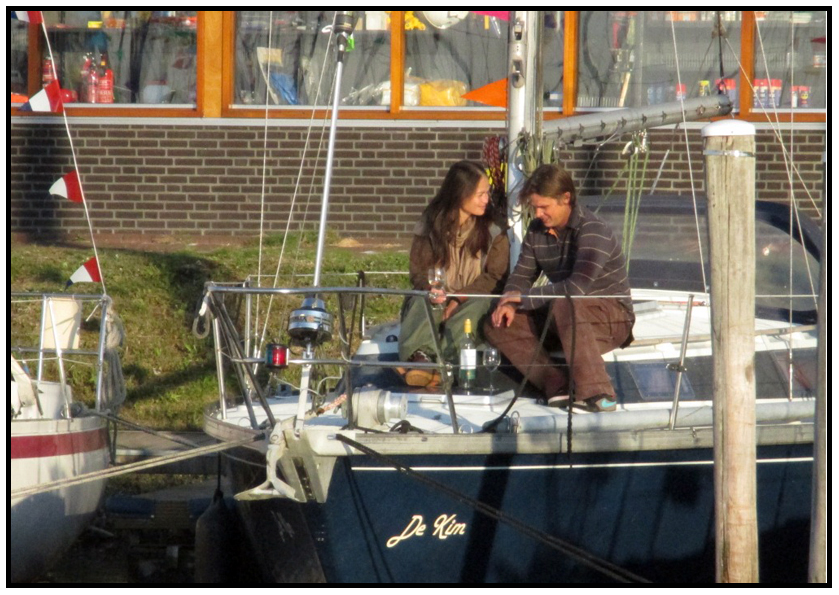
Celebrating with a bottle of wine, courtesy of Jachthaven Noordschans
After months of searching, looking at boats and visiting brokers we’ve finally bought a boat! It’s a Dufour 31 from 1977 and she is wonderful! Funny thing is that we already knew that we were in love with this boat the minute we set foot aboard. But it took a bit more than that to finally come to this decision.
Buying a boat is no sinecure. It takes an enormous amount of research, visiting brokers, looking at boats, and lots and lots of comparison. Depending on your budget and general wishes, in the Netherlands you will get approx. 500 hits for entering sailboat and a certain price range on an average website offering boats for sale. 500 different boats, from different brands with different specifics. Definitely a lot to choose from, and if you’re a newbie in the wonderful world of boats (as we are) you don’t know the difference between a Beneteau, a Hallberg Rassy and a Bavaria (errr…isn’t that a brand of beer?).
And what to look for in a boat? How you’re going to use the boat is quite important in the decision making process. Do you want to race, to play around on inland waterways, cruise the oceans or liveaboard? And then there are so many brands, some are specifically built to race, others to cruise and each brand has so many models that might serve different uses as well, that you can’t see the forest for the trees. There is some useful information to be found on the internet to point you in the right direction, but in the end it mainly comes down to budget and taste.
Apart form browsing the internet, you could also ask people with first-hand experience what they would consider a good choice. Some then say that you must have a Hallberg Rassy. They’re so sturdy, compared to them other boats are so flimsy they will disintegrate once you hoist your sail. Other people swear by a Westerly or a Contest (mainly because they can’t afford a Hallberg Rassy). There is also lots of advise on what you shouldn’t buy, asked or unasked. Apparently Hanse boats have such long masts that they are top-heavy and will topple over. Benetaus are only built to look good for drinking rose in the cockpit, but the bulkheads will break free from the hull on open sea. And Bavarias are the worst: don’t bother leaving the marina, because it will sink the minute you untie the mooring lines. So many people, so many opinions. Just as Bavarias are burned to the ground by critics, you can find movies on youtube of people sailing happily with 7 beaufort or crossing the Atlantic in a Bavaria single handed (on their own), and posts about delaminated Hallberg Rassies (delamination is a severe state of osmosis, which basically means that the epoxy hull is coming apart). In the end the truth is in the eye of the beholder. Apparently comparing brands doesn’t give you an decisive answer.
So let’s look beyond the brands, what are the features you are looking for in a boat? Size is something to consider of course, but what about type and capacity of the engine? Do you prefer polyester, wood or steel? What’s the draft, water displacement and the capacity of fuel and water tanks? Should we go for a steering wheel or tiller? Is a sail drive necessary, and last but certainly not least, what about the looks and layout of the interior? When you start your search and you’ve never owned a sailboat before, you really have no clue which features are important. So based on assumptions, advise from different sources and gut feelings you create a list with specifics you’d like the boat to have. And then you compare that list to the specs of the boats of your search result. Chances are when you disregard all the boats that don’t match your preferences, you’re left with approx. 30 boats to choose from. Still quite a lot. But since we were looking for a sailboat to travel with and live on it narrowed down our choices quite a bit more.
An image on a screen only says so much, thus our next step was to get in the car and drive to the various marinas to survey the boats in real life. And that meant hours and hours in a car, kilometre after kilometre to remote townships you didn’t even knew existed. You find yourself wandering over docks and climbing on wobbly ladders to survey the carefully selected boats. Well, survey…It’s hard to look for possible defects if you don’t know what defects look like, or what even a possible defect could be. And some red flags we know we should be heeding are not directly visible, like osmosis if the boat is in the water, or how the engine runs if she’s on the hard. So after the first surveys it was back to the great hive mind to find out how to look for signs that your dreamboat might be pig in a poke.
One thing we soon came to realise during the first surveys, is that standing height is probably the most important aspect if you want to spend a prolonged time inside a boat. Secondly the sleeping area, often the forward cabin, should be big enough to comfortably sleep in for the two of us (and of course our cat Captain Fluffy who doesn’t like to sleep alone). Thirdly, the sitting area and table need to be spacious enough for both of us to work at. And we need space for Captain Fluffy’s litter box. All and all we had a lot of other major and minor wishes to add to our wish list after our first surveys.
We looked at boats that needed work, boats above our price range, boats that had just one of the major elements on our wish list to compare and come to a thought-out decision. Chances are you probably won’t find the perfect boat, especially if you’re dealing with a tight budget like we were. Along the way we learned that some wishes were more important than others and some were downright unrealistic. But the most decisive element is the feeling you’ll get when you enter the boat for the first time. Some boats had it all on paper and looked spectacular on photographs, but felt cramped, were totally impractical to move around in or smelled really bad (later on we learned that such a foul vinegary smell might be an indicator of severe osmosis). Or some just didn’t feel good, without any specific reason. Just like with people, with some boats you just don’t have a connection.
We’ve spent months looking for the right boat. Based on our wish list, our budget and our gut feeling we made the final decision. It didn’t have an oven, which was one of our major wishes. It needed quite some work like new electronic equipment and wires, new trough-holes, new upholstery and new sails to name but a few. And it was on the small side for a liveaboard vessel. A lot of reason for doubt, therefore we’ve surveyed the boat 3 times before we decided to buy her. But in spite of all the disadvantages we steadily grew more fond of her, and she seemed to look more warm and happy with each visit. So in the end we choose this boat. It just felt good.
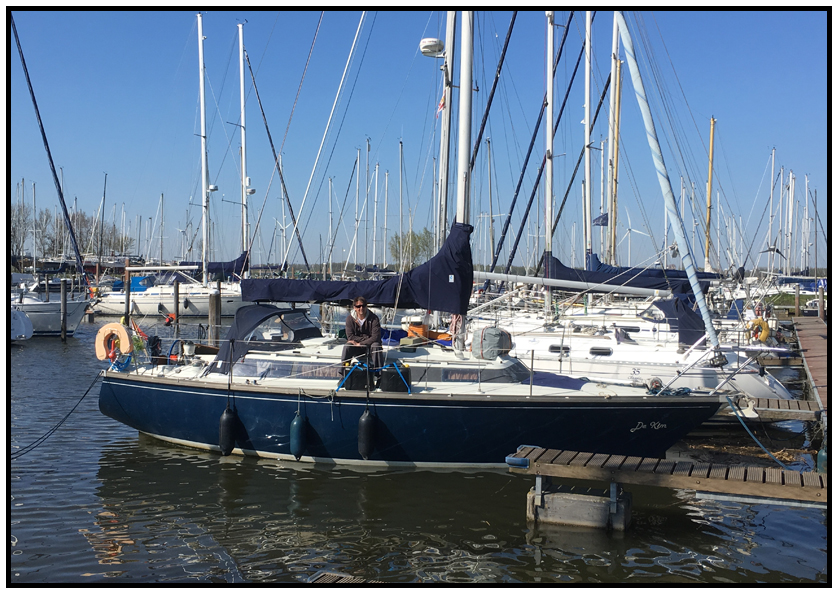
So here we are, proud owners of a 31ft. sailboat, named ‘De Kim’ which means horizon in Dutch. A very promising name.