Freedom

Self-sufficiency is priceless

June 28th 2019

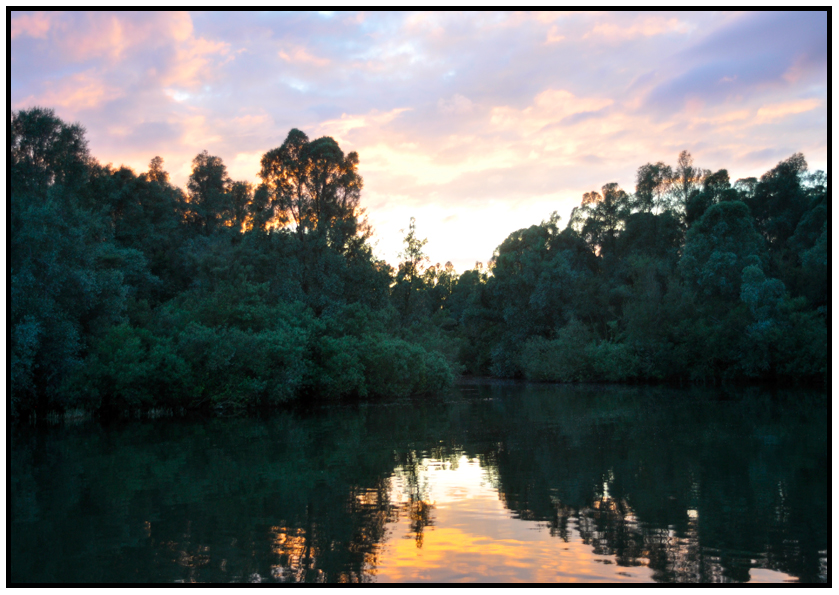
Dusk has fallen, our last evening here.

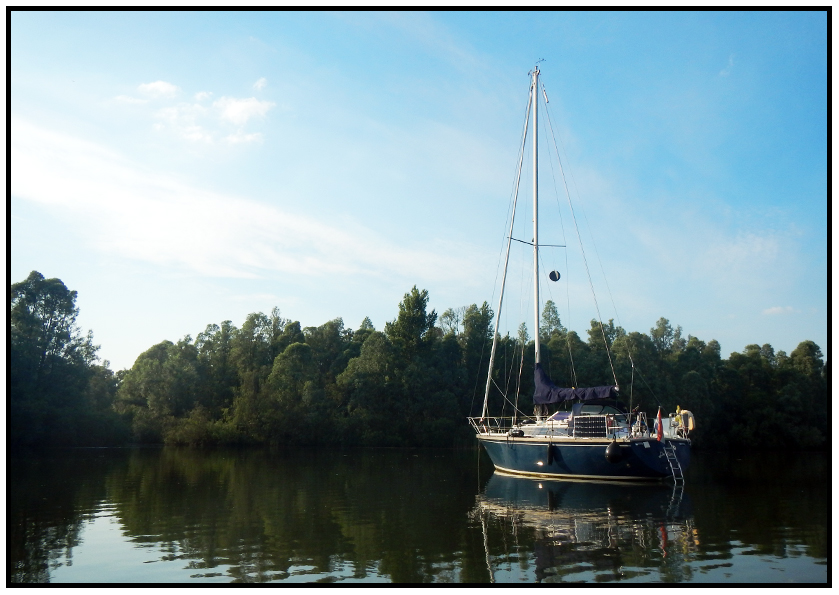
Our last day at anchor here in our beautiful corner of the world. The sun was back again, making the day even better than it already was. In the warm morning sun we gave the cockpit a good scrub which was long overdue. Cleaning a boat is always more fun when it’s warm and sunny.

This is the 7th day that we are anchored here. We’ve never anchored for such a long stretch of time, simply because we have never been able to do that. Before we had the solar panels we could stay at anchor for a maximum of 2 nights. Then we had to hurry back to the marina because we were out of power. The fridge would stop working, but that is of course less dramatic than when your engine won’t start because of depleted batteries.

But the solar panels work like a charm, especially when we move them around following the trajectory of the sun. The batteries are full every day (provided there’s at least a bit of sunshine) and the panels generate enough power to run all the 12 volt equipment like the fridge, the anchor light at night and all the lights in the boat, charge 2 phones, 2 iPads, a handheld VHF and a computer every day. We can also run the alternator, which transforms the 12 volt output of the batteries to 220 volt, and with that we can charge another computer, the batteries of 3 cameras and power a rice cooker. Even on a cloudy day like last Wednesday the battery doesn’t deplete more than 87% of its capacity. So we are very happy with this set-up. 

If you buy solar panels to get cheaper energy it’s hardly worth the investment. It takes a long time before the investment has paid itself back. But from our perspective every day at anchor is a day less in a marina, which on average costs €20 a day. In this calculation it doesn’t take long for the investment to pay itself back. But what’s more important, to be off grid and the increased self sufficiency gives us so much more freedom and mobility. That is truly priceless.

Next on our wish list is a water maker. Before our time at anchor was limited by our battery life. Now the only limit is set by the capacity of our water tank. If we can generate fresh drinking water ourselves, we would be truly self-sufficient.

Speaking of which, we’re running low on water, so we have to leave. When we checked this morning there was still about 30 litres in the tank. Probably we can stretch our supply till tomorrow evening, since we’ll be sailing all day tomorrow. That means that with the solar panels and our current water capacity we can stay away from shore for about 7 to 8 days, which is great!

Dusk has fallen now, time to go inside. Early start tomorrow. It truly was a glorious day.
Our little paradise

Back to the IJsseloog

June 22nd 2019

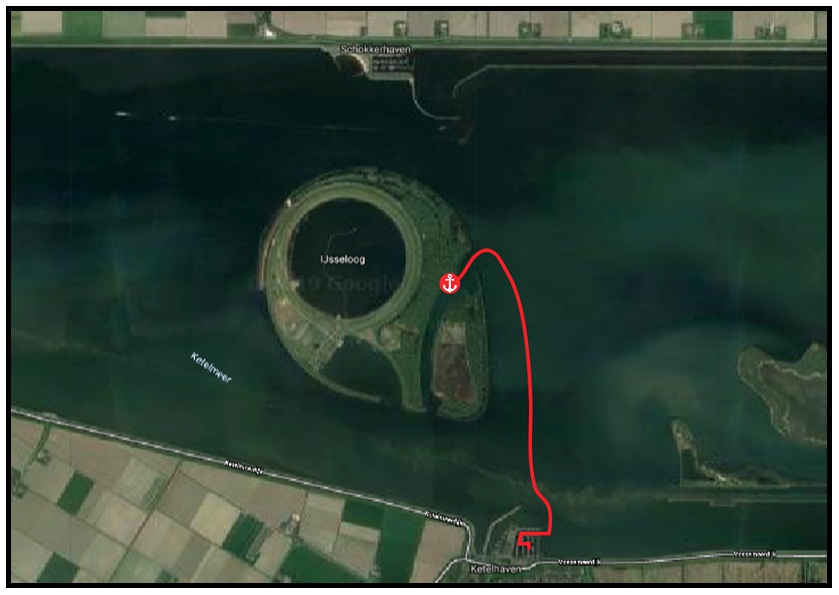
Ketelhaven Dronten to anchorage IJsseloog: 1,8 nautical miles

The weather forecast has predicted a tropical week, so we’re leaving Jachthaven Ketelmeer today to return to the anchorage at the IJsseloog. It will be great to spend the week there at anchor, where we can go for a swim if it becomes too hot. A last shower, filling the water tank and all the small water containers, and we were ready to untie the lines.

Doesn’t this look like a picture out of a fairytale book?

We had hoped that we would be able to anchor at the same spot we had anchored a few days ago. And as if it was meant to be, they had saved us a spot. We didn’t want to be too far nor too close from the embankment. It took a few tries to set the anchor, but after that we had the perfect spot again. We might be getting the hang of this anchoring thing.

We had expected the anchorage to be absolutely swamped because it was a Saturday, but it wasn’t that crowded at all. Later on it turned out that it wasn’t crowded yet because it was still early. During the day the channel slowly filled up and at the end of the afternoon we counted 19 other boats that we could see. But they will probably all be gone tomorrow evening, and we will have the place for ourselves again.
We watched the sunset in the cockpit, just like last week, and enjoyed the choir practice of the frogs. We were glad to be back in our little paradise.

Alternative for a shower

Rain and an afternoon swim

June 19th 2019

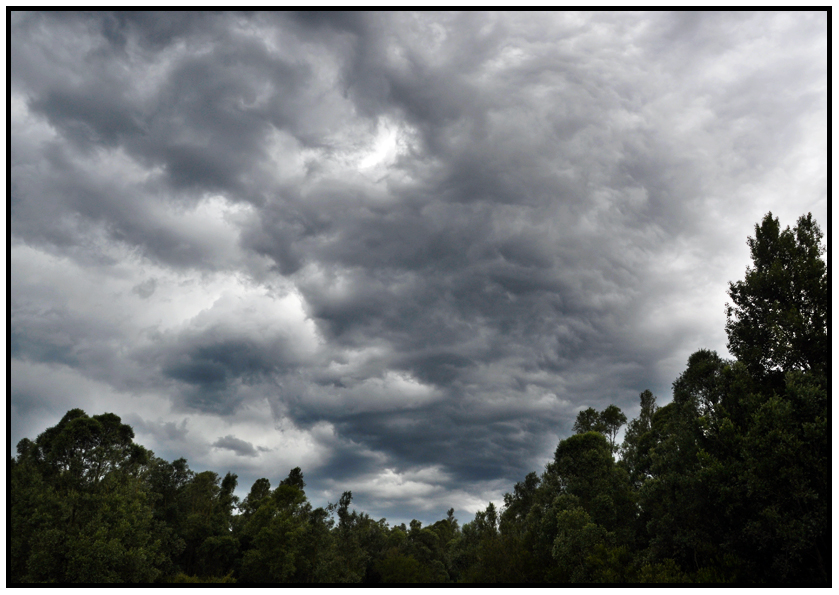
Here comes the rain…

Clouds signaling rain and thunder arrived around noon. A good moment to get some work done. Although it was supposed to rain the whole afternoon it cleared up quite quickly, allowing us to have a nice afternoon swim after all the hard work. Because if you are at anchor, the best alternative for a shower is to take a refreshing dive. 

Very refreshing

The first dive of the year

June 17th 2019

Our little paradise

We woke to the sounds of birds singing. We slept like a rose, the first time at anchor we have slept so soundly. It was a lovely sunny day, and at 8 in the morning already warm enough to have breakfast in the cockpit. All the people that were anchored here yesterday had left this morning, leaving us all alone in our small paradise. 

The frog is returning home to the other bank from its choir practice yesterday

Anxious to explore our beautiful surroundings, we blew up the inflatable dinghy and hopped in. The IJsseloog is a round island with a small channel running through it like a crescent moon. We were anchored at the north entrance of the channel, so we set out to see if there was an even more idyllic spot to anchor at the south entrance. It turned out the island wasn’t so big at all, and before we knew it we had come to the south end of the channel. No need to move the boat, our spot is by far the most beautiful.

However there was another reason to move. We were anchored slightly far from the embankment, and we felt we posed a bit obtrusion to possible traffic. But when we were rowing back to our boat from the south end of the channel we saw that there was a good 30 meters width from our stern to the buoy that marked the the channel. Enough space left for boats to pass. And we were hesitant to move closer to the embankment, in fear we might run aground again. We tried to check the depth with our inflatable boat, and it was possible to move a smidgen towards the shore. But should we relocate just for just a few meters? The anchor was set firmly and if we would relocate it would take a few hours again to be sure that it would hold. After a lot of indecisiveness we decided to stay put, at least for now. Besides, it was very warm, and rowing is a very physical exercise. The water looked more attractive by the minute, maybe it’s warm enough to swim? Jeroen befell the honour of the first dive of the year, and declared the temperature “very refreshing”.

Singing frogs

Anchoring at the IJsseloog

June 16th 2019

Enkhuizen Oosterhaven to anchorage IJsseloog: 21,6 nautical miles

It is time to leave. Water tank all filled up, everything secured, okay…off we go. We hailed the harbour master that we were about to leave and asked him if he would be so kind to open the bridge for us. “Are you wearing your glasses this time?” he answered. Hmmm…apparently it is still the running gag.

We’re never quick to leave, and it was already past one o’clock in the afternoon. We wanted to sail to the IJsseloog, what is famed to be the most beautiful anchorage in the Netherlands. But according to our navigation app it’s almost 6 hours sailing, so maybe it’s already running a bit late to make that passage. 

We decided to see if there was an empty spot to anchor at the Zuiderzee Museum where we had anchored a week ago, and leave early tomorrow morning. So we turned to port right after we left the municipality marina, to enter the sheltered anchorage near the museum. It was a bit crowded, but it seemed like there was still a spot where we would be able to squeeze in. It was quite shallow but just do-able, so we dropped the anchor, let out more chain and slowly moved backwards. When the anchor had dug itself in, we surveyed our location. We were too close to the boat behind us, at least in our opinion. The guys on the boat didn’t even bother to look up. No…definitely too close, so we hoisted the anchor again and went in search for another spot. The only other spot left available was really too shallow for us. Apparently the universe thinks it’s time to leave Enkhuizen. It is saying “Leave now or stay forever!”.

We decided to go to the IJsseloog anyway despite the fact that in the meantime it was already was 2 o’clock in the afternoon. We could always find refuge in Urk we reasoned, which would shorten the trip with 2 hours. But the wind was stronger than forecasted thus the passage also was swifter then we had anticipated. We were soaring along with an average speed of 5,5 knots. It was almost a downwind sail, so we didn’t even have to tack for 3 hours.

Jeroen at the helm

The only obstacle we had to negotiate before we would reach our destination was the Ketelmeer bridge. Unfortunately we had just missed the opening and had to wait for 30 minutes. We needed to lower our sails before we could pass the bridge. Heading downwind means you end up at the lee shore. That means that all the water is blown towards that side of a lake, and with these winds it was causing quite steep waves. So steep in fact, that the boat was rocking violently back and forth like a see-saw when we were heading straight into the wind to lower our sails. The nose disappeared into the waves every time the boat rocked forward. Jeroen had to hang on for dear life not to be thrown overboard when he was lowering the main sail.

Weird, once we passed the bridge the wind and the waves were gone. We initially hoisted the sails again, because we still had 90 minutes to go to before we had reached the island. But there just wasn’t any wind anymore. Only because of that one bridge we went from 6 knots to 1 knot speed. It was already 5 o’clock and we were getting tired. Since we didn’t feel like slowly bobbing forward we reluctantly started the engine.

After an hour motoring we arrived at the mooring spot at the IJsseloog. It was beautiful! Big trees, birds singing everywhere and luckily not too crowded with other boats. The IJsseloog is an artificial island in the Ketelmeer. The island functions as a depot and cleaning station for polluted silt. The depot in the middle of the island where the silt is stored is sealed thoroughly, so that no pollutants can enter the surrounding water. The outer rim of the island is designed as a recreational zone, with a protected channel where boats can anchor.

We saw a spot where we wanted to anchor. A quick peek on the navigation app assured us that it was 2,5 meters deep there, so we should be alright. But when we moved towards that spot we saw the depth rising fast to 1,4 meters! We’re stuck! Bit of wriggling and we were free again, so we quickly moved on and tried to anchor somewhat further. We dropped the anchor, slowly backed away until the anchor was set. We surveyed our surroundings and saw thick bushes of water plants below the surface. “Maybe the plants cause the depth meter to measure 1,4 meters. But isn’t that the ground we see there?” A bit of poking with the hook told us that what we saw was indeed the ground and we were stuck, again. We couldn’t even move the rudder.

We started to haul in the chain to tear ourselves loose again, which fortunately worked. Not trusting the map anymore we cautiously explored the other side of the small channel, and discovered that the depth was better there. We threw the anchor in again, and this time we had more luck. 

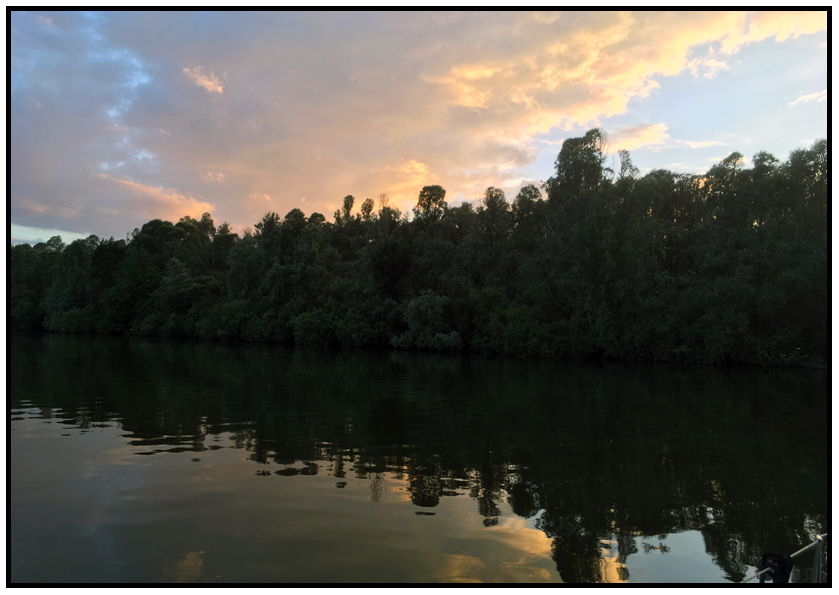
Our view on the setting sun

After a tiring day we settled down in the cockpit. The scenery is truly beautiful. It doesn’t look like we’re in the Netherlands anymore and somehow were magically transferred to a picture from a fairytale book. We spend the evening till darkness fell in the cockpit to watch the sun set with a backdrop of twittering birds and singing frogs.