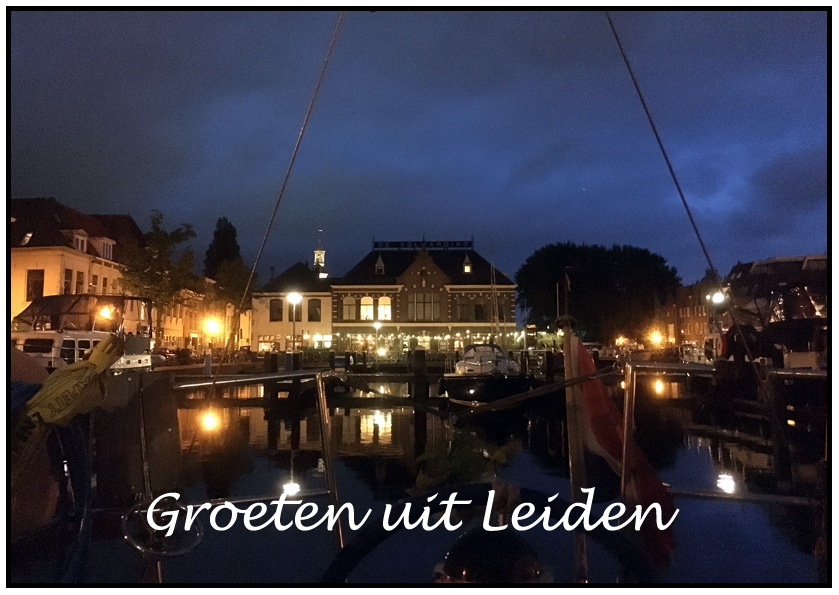
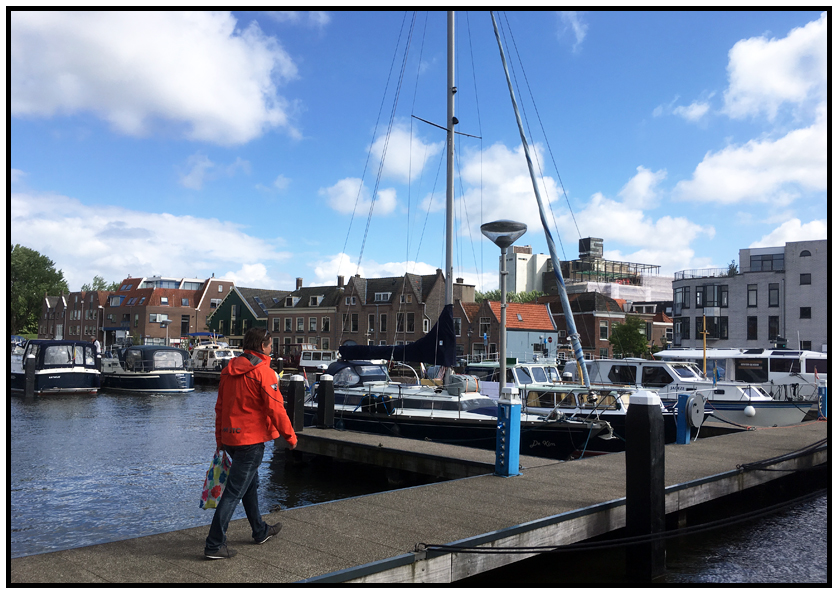
It turned out yesterday was not our last day in Leiden. Because were not sure which way to go yesterday and only decided early in the morning, we didn’t have much sleep and couldn’t get up early. Now we aren’t early birds anyway, so when we were up and about it was more approaching afternoon than that it was morning.
When we went to the marina office to return the key they told us that they wouldn’t operate the bridge during lunch break. That meant we had to wait until half past one. We followed their example and had lunch first before leaving, but when we were finished it was already after two.
Much too late to leave, so we collected the key for the sanitary building again, paid for another night and started planning tomorrow’s trip.
Funny, we both felt reluctant to leave, and were quite relieved when we had decided to stay another day. So it’s probably for the better. Before we left we were often given the advise to trust your instincts, and never to do something that doesn’t feel right. So we’re probably better off staying here today.
Friends of ours who live in Leiden had just returned from a holiday to the UK yesterday. They came to collect us in the morning and after the kids had spend enough time petting Captain Fluffy we all had breakfast together outside in the sun.
The 5th of May is Liberation Day in the Netherlands, so the city was alive with festivities and music. We strolled through town, through all the little streets and alleys, and visited ‘De Burcht’, the old fortress of Leiden. After the festivities we had dinner at our friends’ place, and enjoyed the evening together.
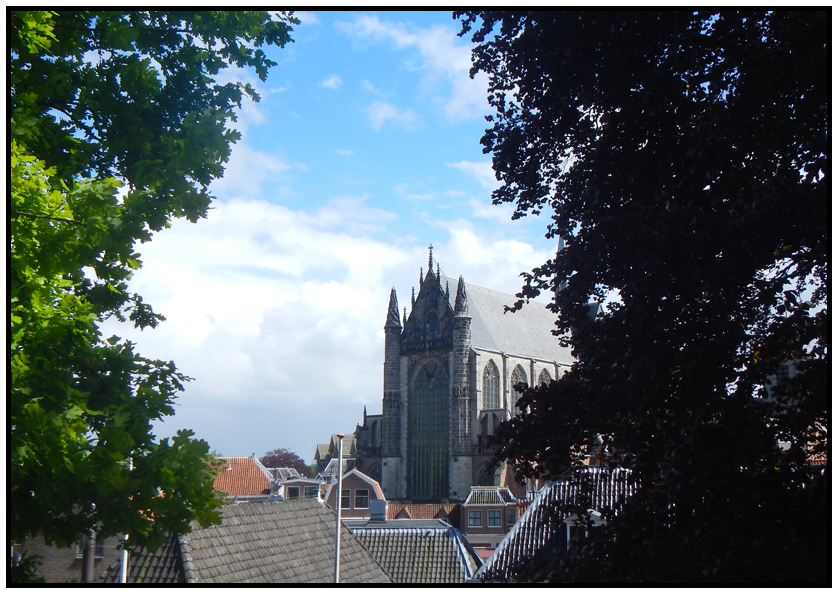
A view on the Hooglandse Kerk from the old fortress
When we were back on our boat late in the eventing, there was still the decision to be made either to go to Haarlem or Amsterdam. We were still not sure which one to choose. We kind of dreaded the nightly passage, but sailing in convoy the whole day and the tight schedule on which you had to pass through Haarlem didn’t sound too great either.
In the end we chose Amsterdam, because we could find more information about this route, and we didn’t fancy sailing in convoy the whole day and pay for it as well. And although we’ve never done a nightly passage before, one time has to be the first, hasn’t it?
Today we’re taking things slow. The hailstones and rain were creating a tantrum on the deck. Not a particularly fine day for outdoor activities, but a good day to get some work done. In between hailstorms we went out to get some groceries and Jeroen made his signature dish; a delicious roasted tomato soup. The perfect comfort food for the cold weather.
It was time to think about the next passage. After Leiden the ‘Staande mast route’ separates in two directions: we could either choose to go through Haarlem or through Amsterdam.
Both options have their advantages and disadvantages. The Amsterdam route is shorter, but you have to traverse the city in convoy by night. Haarlem meant sailing in convoy from Sassenheim -a town you pass through directly after Leiden- to the entrance of the North Sea canal after Haarlem. The convoy isn’t the problem as such, but it leaves early in the morning from Sassenheim because of the railroad bridges you have to negotiate. Because you start early in the morning the passage is during day time, but you have to pay for the passage through Haarlem.
But although we have bought a pilot for the Staande mast route and the many sources you can find online that provide information about this route, it’s rather annoying that none of them are conclusive and many sources are downright confusing or provide false information. It’s hard to find exact times for crucial bridge openings, maps of the inner city waterways of Haarlem and Amsterdam, how the convoy works, and who to contact if you have questions. There is particularly sparse information on the Haarlem route.
After much deliberation we were still not sure which one to choose, so we decided to make a decision tomorrow evening.
This morning we went to Siebold house, a museum dedicated to Japan. The founder of the museum, Philipp Franz von Siebold (1796-1866), used to be a physician in Dejima, a Dutch trade outpost in the early 19th century near Nagasaki in Japan. In those days Japan was closed for foreigners. They couldn’t enter or travel through the country. The Dutch were the only foreigners allowed to trade with the Japanese. But they weren’t allowed to leave the small island, save only for a happy few that were invited to court in Edo, the former capital of Japan, to honor the emperor. Siebold was allowed to travel to Edo, but was secretly entrusted with another objective by his superiors; to obtain as much intelligence as possible on that mysterious country. In Edo he obtained several maps of Japan, which was strictly forbidden that time. When the Japanese found out he was in possession of the maps, he was convicted of high treason and banished from Japan. But he didn’t leave the country without all his prized belongings. Illegally. The museum was his house where he used to display the objects and artifacts he brought with him from Japan.
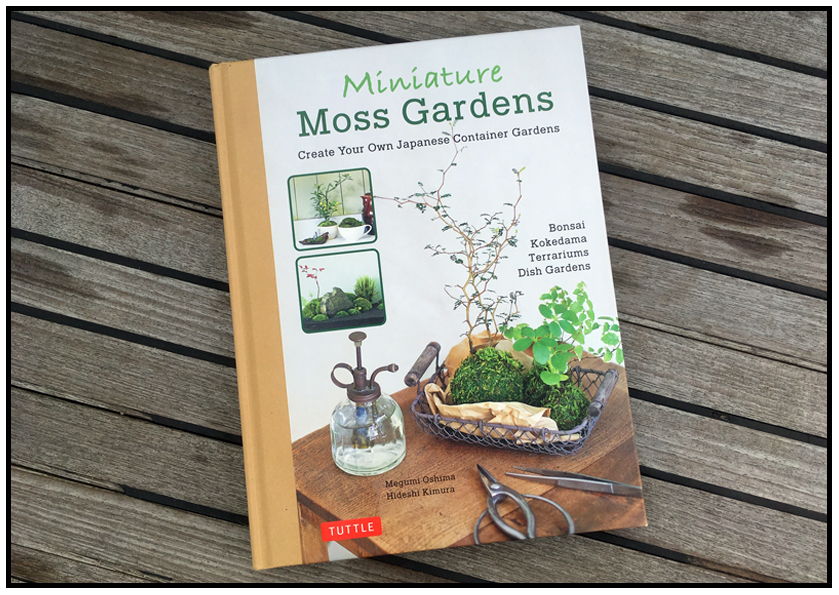
We used to come here often but haven’t been here for a while, so it was fascinating to see the intricate works of art on display again. They also have quite a large bookshop dedicated to all things Japanese. Although we already have too many books aboard, we bought a book on how to make moss gardens. Making moss gardens seems to be an ancient in art form in Japan and to have developed from the art of making Bonsai trees. It was so peculiar we just couldn’t resist.
Jeroen’s mother came to visit later that day. Together we took a walk through town in search for a restaurant to have dinner together. The weird thing about traveling is that you start to see things that normally you would just walk past. We’ve been here often, Jeroen even lived here for many years, and nevertheless we saw things today that we hadn’t noticed before. Maybe it’s because you’re not rushing from A to B, but just take your time to soak up everything that you start noticing things hidden in plain sight.
Hooglandse Kerk: We’ve past this church many times, and never looked up…
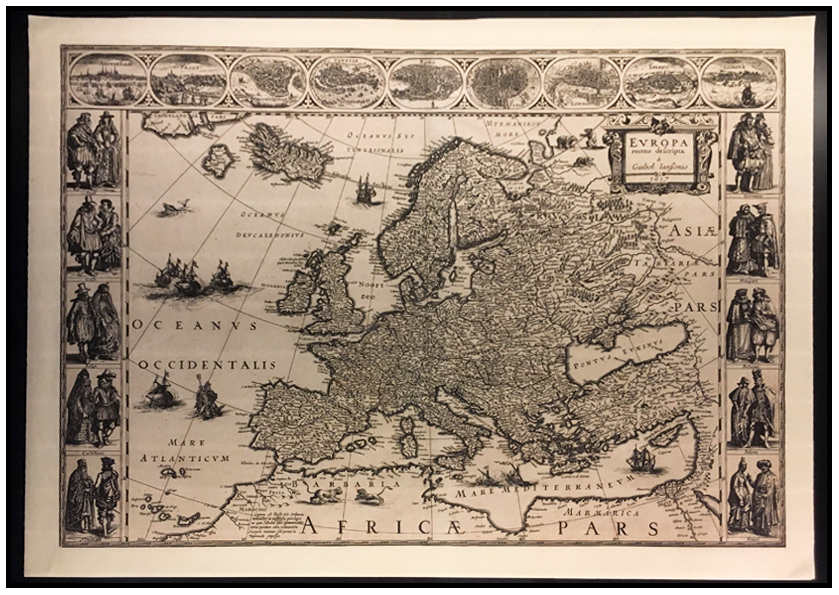
It would be something else to sail only with the aid of these charts as seen at the Boerhaave Museum
We woke up with rain today, and it kept on raining the whole morning. In between rain showers we went to the sanitary building for a shower. The sanitary building is actually the old harbour office. Funny, from the outside it doesn’t look like it’s being used as a place to shower, just like a monument of sorts.
We made use of the rainy morning to get some work done. In between traveling and exploring sometimes work tends to be forgotten, we’re trying to get into the habit to work while it rains.
When it cleared up in the afternoon we went to museum Boerhaave, a museum dedicated to science and medicine. It’s named after Herman Boerhaave, a renowned physician and botanist from the 17th century. The museum contains a remake of an anatomical theatre, and many other historical scientific instruments.
Today you could also join a workshop to learn how to make soap. We saw it being advertised when we came here, but we couldn’t find the place inside the museum where the workshop was being held. Suddenly we smelled soapy fragrances, so we followed our nose to the source of the smell. The smell originated from a space crawling with children, with a few forlorn adults, probably the parents as statues in the bustling sea of small people. Apparently the workshop was intended for children. But we wanted to make soap too, so we sat down at an empty table and tried to figure out how we could get started. An museum employee came to us and asked with how many we were, because he needed to melt the soap for us. “Just the two of us” we said. “Two? No children?” He was obviously confused that two adults wanted to join the workshop. We said something along the lines of releasing the inner child after which he recovered from his shock and enthusiastically started to explain everything in detail.
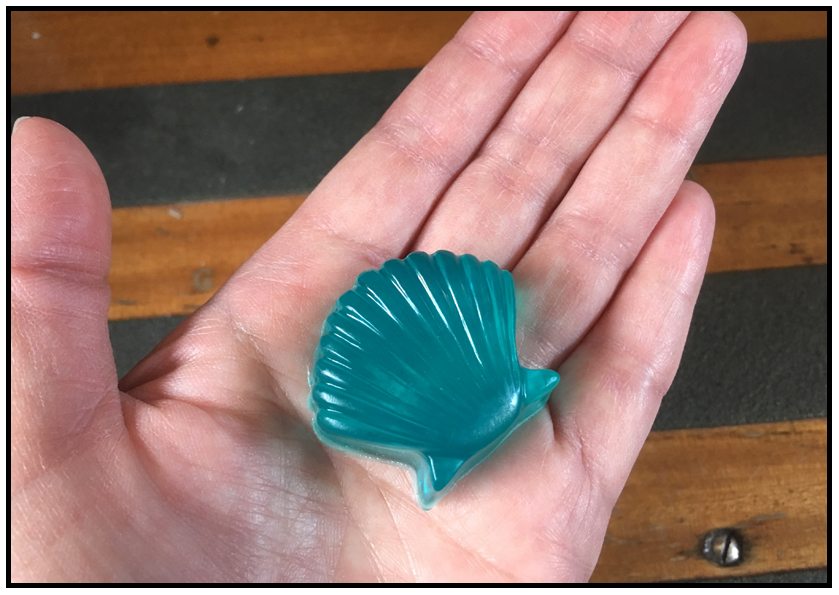
We received a small glass jug with molten soap to which we could add a few drops of color and fragrance. The aromatized liquid soap then had to be poured into small molds, and the whole thing needed to set for about 20 minutes. Although not exactly complicated is was a lot of fun to do. A couple with their two children joined our table. The father asked us what they were supposed to do, and we explained that they could select a color and a fragrance, and that the museum employee would be with them shortly for the soap. So the children and the father had already selected a fragrance when the guy from the museum came again. “How many people? he asked, then looking at us he asked the parents “You too?” The mother didn’t respond at all, she was zoned out, but the father said in a very grownup tone. “Well, it is for the kids isn’t it?” The museum guy left again an came back with 2 jugs which he gave to the children. The father looked greatly disappointed, but said nothing. “Where is your jug?” asked his daughter. “I didn’t get any” he said looking crestfallen. “Then go and ask him if you also can get one” she said. “No, it’s okay” the father said trying to hide his disappointment. So funny, it’s so not done to act out of character, like joining in a children’s workshop (although we checked later, it actually said nowhere that it was only for children). The reaction of the museum guy was hilarious, as was the disappointed father who didn’t dare to admit that he wanted to make soap too. When we later plopped the little soaps out of their molds and left the father glumly wished us much joy with them…