Energy crisis

Why you don’t charge batteries with your engine

July 20th 2019

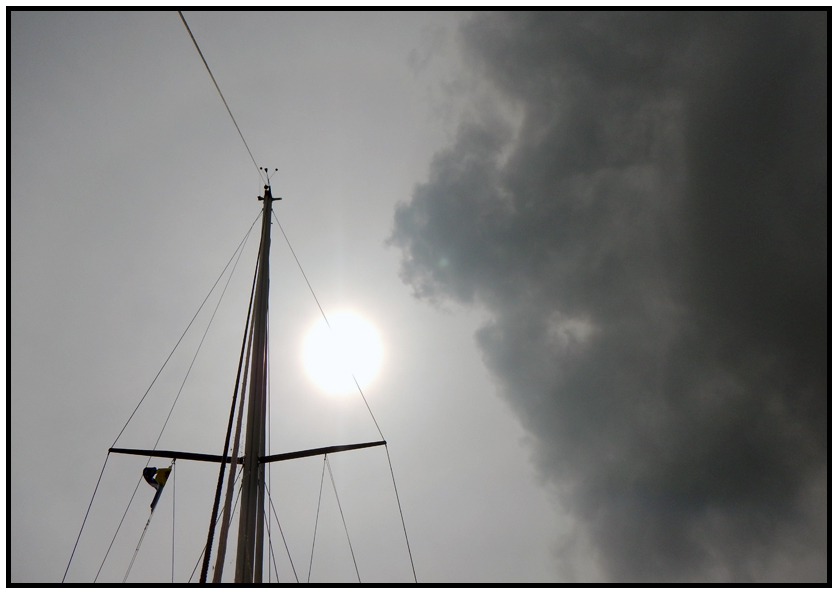
A squall had drifted over with with thunder, lots of wind and heavy rainfall. No sun, which was unfortunate because the last two days were also heavily overcast, so we were running a bit low on power. A dwindling battery capacity meant we couldn’t charge our devices. The batteries of our computers and tablets were already empty, so we couldn’t work anymore. It didn’t look like the sun would make an appearance today. The downside of being a digital nomad is that we need a computer or tablet and an internet connection for work, so we had to think of something else to recharge our batteries. Of course we could go back to the marina, but we didn’t want to go back anymore. If we go back we might never leave again once we’re safely moored in the Oosterhaven.

You might have heard the theory that if you run your engine for half an hour, your batteries are full again. Same with your car, if you have jump-started a car after a flat battery, you need to drive for a while to charge the batteries with the dynamo, otherwise you need to jump-start it again the next time. Apparently it also works with boats.

We decided to put the theory to the test. We started the engine and checked the charge level of our batteries so we could check the progress. After half an hour of running the engine we had only gained 3% more. Hmmm…it apparently takes longer than 30 minutes. We decided to leave it running for another half hour, and in the meantime made ourselves a delicious warm lunch with toasted pita breads stuffed with ham and cheese. 

Suddenly we noticed that the landscape was moving. Since landmasses do not tend to wander around the obvious conclusion was that we were staring to drag. And quite severely, because the wind was blowing pretty hard. Luckily our engine was already running to intervene. We quickly went outside, hoisted the anchor, moved forward again and reset the anchor.

Glad that we were able to fix the problem so fast we went back indoors again and continued our lunch. But when we looked outside we noticed that we had started to drag again. And by now it was also raining a tantrum.

We quickly went outside again to reset the anchor in the howling wind. Totally drenched we returned inside, and could finally finish our lunch. It seemed like the anchor is holding this time. We had shut down the engine as well, because we didn’t want to risk dragging a third time. It hadn’t worked anyway. All in all this adventure had only generated 5% more power…

So what had we learned from this all?

1. Running the engine whilst stationary to charge batteries doesn’t really work. The yield is not worth the diesel and the noise.

2. Running the engine to charge batteries could dislocate your anchor and cause you to drag.

Our conclusion: Don’t charge batteries with your engine while at anchor. 
Pirates

Sneaking ashore for food, water and a shower

July 19th 2019

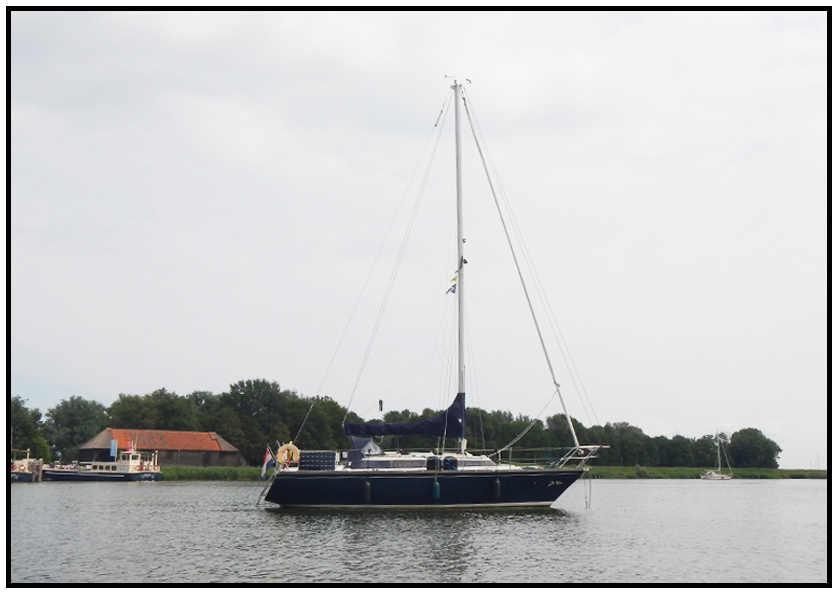
Our little boat in the bay at the Zuiderzee Museum

No rain, but no wind either today. We wanted to go to Makkum next, but the passage to Makkum is 24 miles which would take more than 12 hours with just 3 knots of wind. The passage will have to wait.

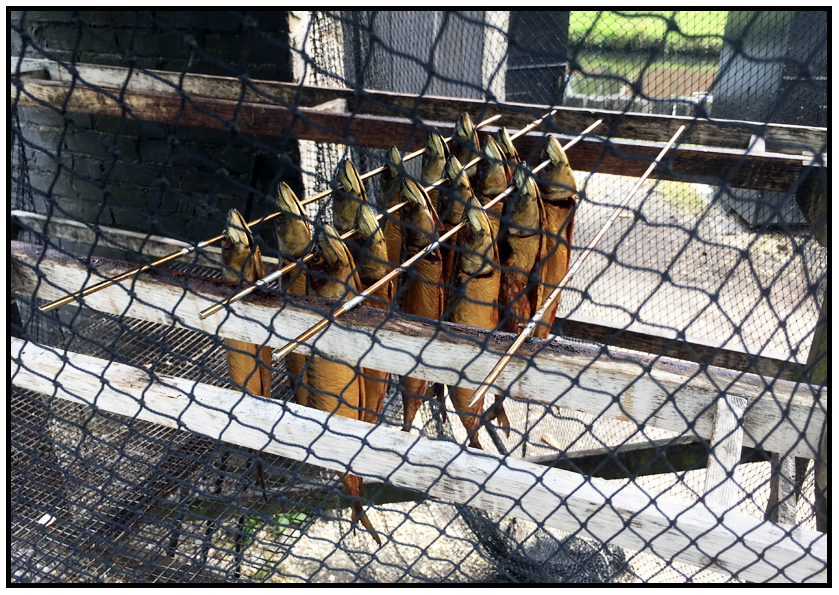
But that’s quite okay, because there’s something we still wanted to do. We are anchored in a sort of little bay that is enclosed by the Zuiderzee museum. From our anchorage we can see many docking piers extending from the museum. So we were thinking, what if we would row to one of those piers, got off the boat, buy one of those delicious smoked mackerels and row back? We can smell the smoked fish from here, which is extremely tantalizing.

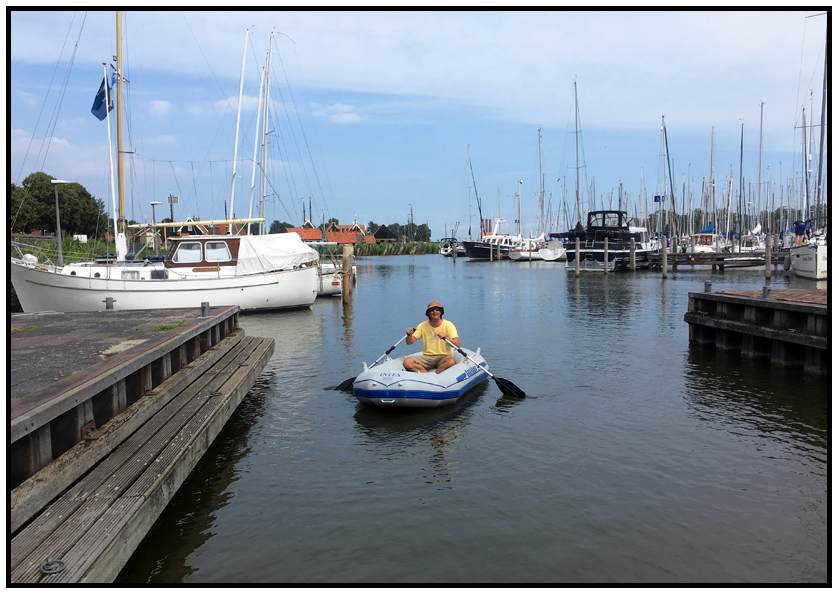
Although we also considered this expedition last time we were anchored here, the appraching storm prevented us from realising our plan. But now is the time. We’re hungry and we’re going to get some fish. Without a minute to lose we jumped in our inflatable dinghy and rowed to the shore.

Drop off by dighy

Carmen debarked to get the fish at the museum, while Jeroen paddled back to one of the docking piers. Triumphantly with a bag of smoked mackerel we returned to our boat. A successful expedition!

Delicious smoked mackrel

In the evening went to shore again to sneak a shower. We do not have a proper shower aboard. With a water tank that can only hold 100 litres showering is not a good idea anyway. With our small tank we would need to refill the tank after every shower, which is especially inconvenient when you’re at anchor. So we stealthily rowed to the marina and had a nice warm shower. We feel like real pirates now.

Dreams of distant shores

Cocooning in the saloon

July 18th 2019

Bad weather approaching…

We decided to stay another day at our anchorage. Although the day started glorious, the weather was going to deteriorate later on. And we didn’t really fancy sailing in bad weather, so we decided to enjoy the sunshine while it lasts and check for another weather window. And sure enough, early afternoon the clouds drifted in and obscured the sun, soon followed by rain. Maybe we’re odd people, but just as much as we like a sunny day in the cockpit, we love a cosy cocooning day in the saloon. So while the rain drummed on the hatches we listened to the audio book version of ‘Treasure island’ and dreamed of distant shores.

Peculiar algae

Surrounded by Cyanobacteria

July 17th 2019

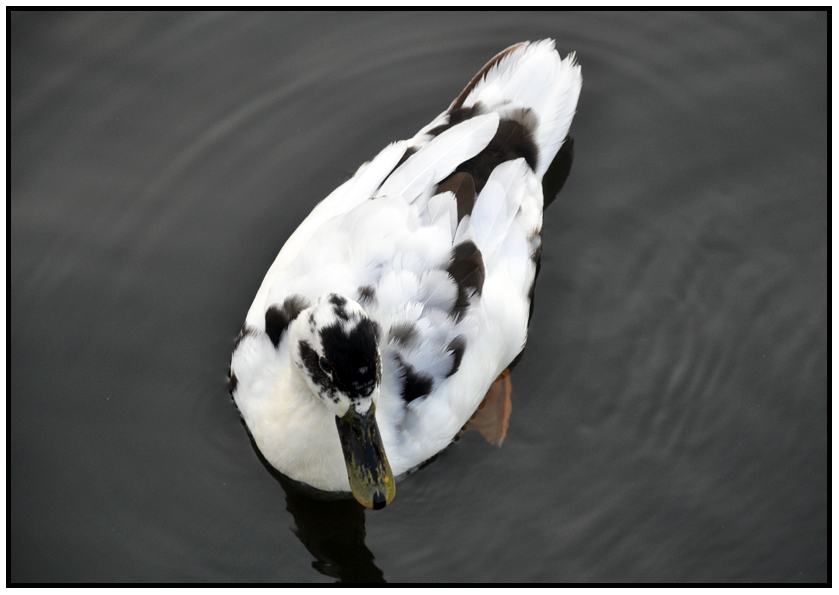
A remarkable looking duck, eating the algae

Finally the clouds were gone and the sun was back again! What a glorious day to spend at anchor.

The only downside of high temperatures and slow running inland waters is the rapid accumulation of blue-green algae, also known as Cyanobacteria. These algae are rather peculiar. They are the only single cell entities that can produce oxygen. In the early years of our planet’s existence there was hardly any oxygen. There were only single cell life forms like this bacteria and some didn’t even need oxygen to exist. Then these Cyanobacteria started to produce large quantities of oxygen by means of photosynthesis, like plants. The organisms that didn’t need oxygen diminished, while the Cyanobacteria grew in numbers. The steadily growing numbers of Cyanobacteria produced more and more oxygen, eventually enabling more complex life forms like humans to see the light of day.

So although we probably thank our existence to these algae, they can also cause us quite a lot of harm. In slow running waterways or stagnant lakes their numbers grow explosively when the temperatures rise, and they start to ‘bloom’ which you can tell by the greenish smears in the water, a bit similar like swirls of green paint. These blooms can produce toxins that can cause serious illness when you swallow them by accident. 

So despite the heat we didn’t fancy a swim, with al the blue-green swirls of algae all around us. Maybe this is a sign that we should move North…

Keep on movin’

Anchoring at the Zuiderzee museum

July 16th 2019

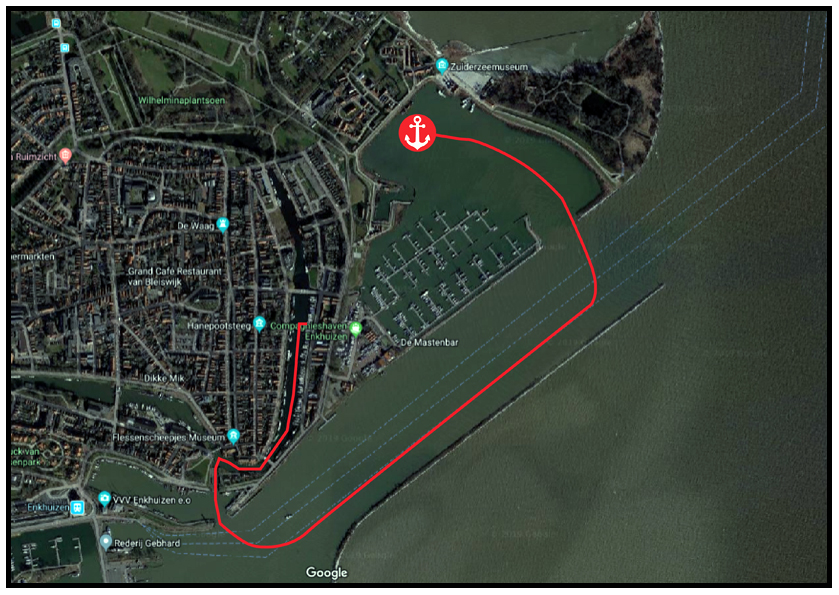
Enkhuizen Oosterhaven to anchorage Zuiderzee Museum: 1,1 nautical miles

After a really pleasant stay we left de Oosterhaven in Enkhuizen. Funny, if you like it somewhere it is hard to leave, especially if you have all the conveniences you need within reach, like shops, water and electricity. But we decided yesterday that if we wouldn’t leave today we probably would stay indefinitely. It is as if you’re losing your momentum. Once you’re moving it’s easy to keep moving. But when you stop, it becomes really hard to set the whole thing in motion again. It is a thin line, finding the balance between taking your time without rushing and keeping your momentum.

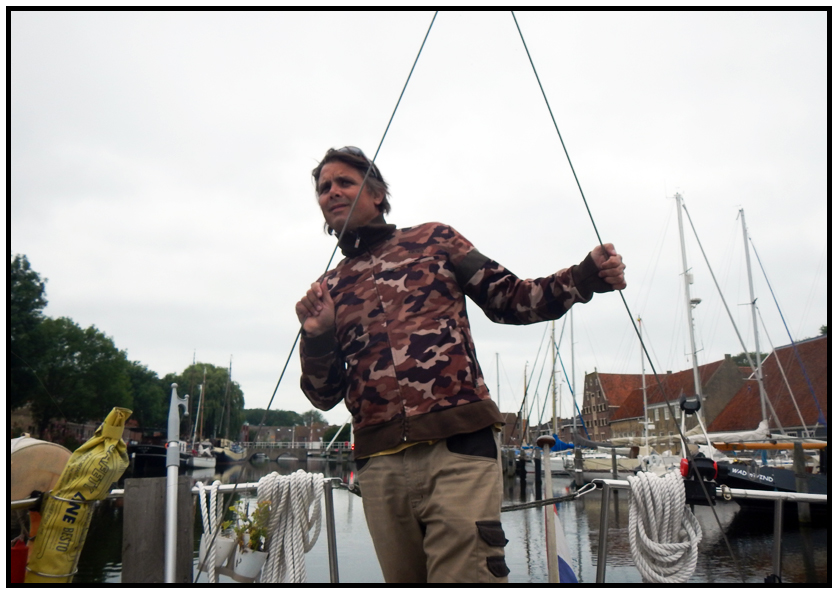
Checking if the Blauw bridge is open

It now sounds as if our next passage was a long one, but it wasn’t. We only motored 1,1 nautical miles to the anchorage near the Zuiderzee museum. There was next to no wind. The wind would be favorable again on Thursday and Friday, so we anchored here until we really leave. Somehow we find it easier to get started from an anchorage than from a marina. So we might not have gotten far but at least we are moving again.

There and back again

Return to the Oosterhaven

June 30th 2019

Anchorage Kooizand Enkhuizen to Oosterhaven Enkhuizen: 1,6 nautical miles

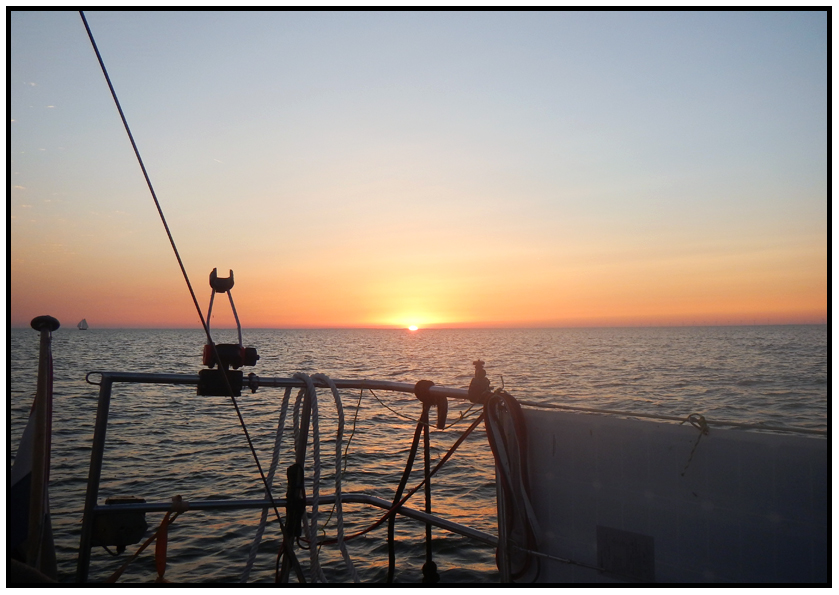
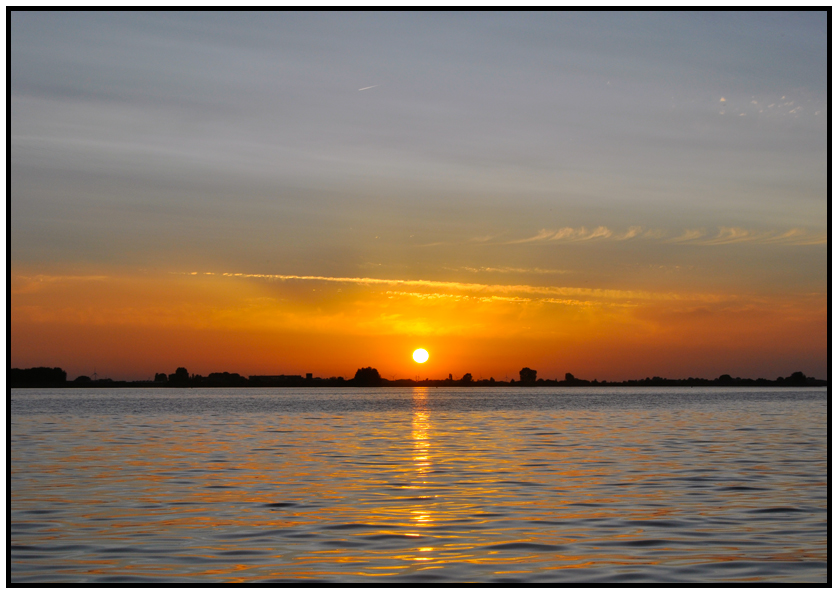
We were woken early by being jolted hither and thither by the waves. The wind direction had changed, but the waves were still coming from the same angle from which the wind blew before. And it was blowing much harder than forecasted. Oh well…the unpredictability of the weather. We tied everything up that was flapping about and were just in time to see a beautiful sunrise.

One of the first sunrises we’ve seen from our boat

Since it was quite early we tried to catch some more sleep. When we woke again it was blowing even harder and from another direction than predicted. We chose the spot because the wind was supposed to turn from easterly to south-westerly during the night. But now it was more northerly, causing us to be exposed to the waves and the wind. On top of that we were also dragging a bit, probably because the wind had turned 180 degrees, or that the chain we had let out wasn’t long enough for the increased wind and waves. But first things first: we were not going to leave without breakfast and some coffee first like we did at the Braassemermeer. The coffee was made with the very last drops of water. We had just managed to stretch our water supply to nine days.

From the anchorage it was just a short distance to the Oosterhaven. When we hailed the harbour master about an available slip, he said that I didn’t need my glasses this time because it was a familiar spot. Still the running gag…

After filling up the water tank, connecting shore power and all the other usual mooring stuff we went to the ticket machine to pay the fee. We treated ourselves to a nice lunch with soles and fries, bought some bread on the way back and spend a relaxed afternoon on the boat.

Well, we’re back.

Magical passage

Downwind sail to Enkhuizen

June 29th 2019

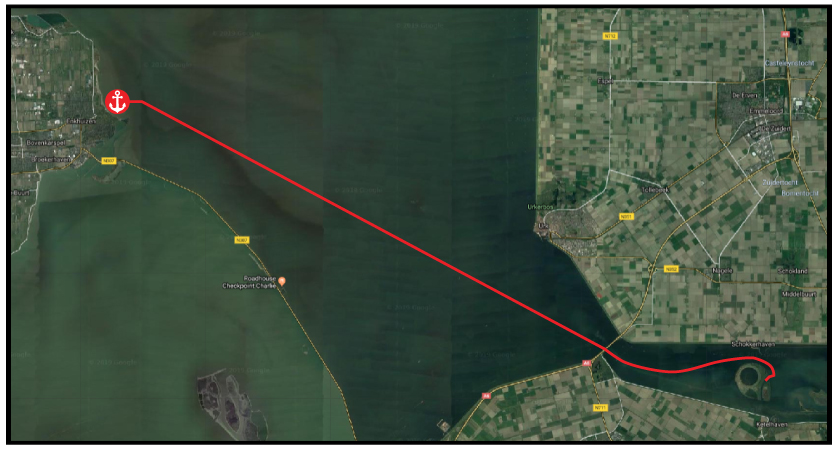
Anchorage IJsseloog to anchorage Kooizand Enkhuizen: 20 nautical miles

We’re leaving today, destination Enkhuizen. This is such a wonderful spot, if it wasn’t for the dentist appointment we have in two days, we would probably stay indefinitely. There are worse days to leave, though. The sun was shining abundantly, the temperatures were tropical and we had nice light winds for a downwind sail. We quickly forgot our sadness, because when we had hoisted the sails and shut down the engine it was great to be sailing again.

Time also to try something new. When we bought the boat it came with a steering pilot. We’d never used it before, because there wasn’t really a need for it plus we wanted learn how to sail and get a feel for the subtleties of the wheel before delegating it to an automaton. And since it was almost a straight line from our anchorage to Enkhuizen, it was the ideal passage to try it out. You enter a course with degrees, and then the pilot steers the wheel and holds the course. It took some getting used to. The rudder responds slower to the pilot than to hand steering which led to overcompensating and nervous pressing of buttons. But after a while we got the hang of it and were able to relax and let the pilot steer for us. Although an oldie, it still worked perfectly.

We had to cross the Ketelbrug again, so we started the engine and lowered our sails. The lazy jack we made works great as well. The sail just drops into a heap in between the lines, without it flapping all over the place. And after we had passed the bridge we could easily hoist it again. Another success!

After the bridge the only thing we had to do was sit back and find something to do for the next 6 coming hours. We found the perfect way to entertain ourselves on a boat with tropical temperatures: jumping off the boat. Without the need for constant hand steering we could take turns in taking a dive to cope with the heat. Although it looks like the boat is practically standing still, it still has a speed of 2,8 knots. It doesn’t sound like much, but if you are in the water the boat moves incredibly fast. We jumped in from the bow holding a line, and the moment you surface again the boat has already past. That’s how fast the boat moves. You feel a jerk of the line and then you’re towed behind the boat. Way to slow to do any waterskiing or wake boarding, but the force you feel is already tremendous.

We also discovered that the best place to sit was on the bow in the shade of the genoa. From there we also had a better view on what happened before us. When we spotted someone who had right of way or big freight ships, we could walk back to the pilot easily and adjust the course, after which we could continue lounging on deck. 

On the lookout for oncoming traffic from a shady spot on the bow

However there were not only success stories today. There was one technical issue, not with the pilot, but with the wind meter. It just suddenly stopped working. A few quick interventions we could think of didn’t work. A detailed investigation has to wait until we’re in a marina. Hopefully we don’t have to go up in the mast again…

After 5 hours of sailing the wind started to die down slowly. We saw our speed dropping from 2,8 knots to 1,8 knots and finally to less than a knot. Since we were already quite close to Enkhuizen, we turned on the engine and motored the last 15 minutes. It was already after eight, too late to moor in the Oosterhaven because the bridge is only operated till 5 o’clock. That’s a pity. We had hoped to moor in a marina this evening because our water tank was almost empty. Hopefully our water supply will last till tomorrow morning. We decided to drop the anchor at Kooizand, the recreational beach of Enkhuizen. There were already quite a few boats there, but we found a spot amongst them, anchored successfully and shut down the engine. Another first, we never have sailed from anchorage to anchorage before.

We took an evening dive to refresh ourselves a bit and contemplated the day in the cockpit whilst the sun was going down. It was an amazing day, glorious weather and the most relaxed and magical passage we ever had.

Sunset at Kooizand

Freedom

Self-sufficiency is priceless

June 28th 2019

Dusk has fallen, our last evening here.

Our last day at anchor here in our beautiful corner of the world. The sun was back again, making the day even better than it already was. In the warm morning sun we gave the cockpit a good scrub which was long overdue. Cleaning a boat is always more fun when it’s warm and sunny.

This is the 7th day that we are anchored here. We’ve never anchored for such a long stretch of time, simply because we have never been able to do that. Before we had the solar panels we could stay at anchor for a maximum of 2 nights. Then we had to hurry back to the marina because we were out of power. The fridge would stop working, but that is of course less dramatic than when your engine won’t start because of depleted batteries.

But the solar panels work like a charm, especially when we move them around following the trajectory of the sun. The batteries are full every day (provided there’s at least a bit of sunshine) and the panels generate enough power to run all the 12 volt equipment like the fridge, the anchor light at night and all the lights in the boat, charge 2 phones, 2 iPads, a handheld VHF and a computer every day. We can also run the alternator, which transforms the 12 volt output of the batteries to 220 volt, and with that we can charge another computer, the batteries of 3 cameras and power a rice cooker. Even on a cloudy day like last Wednesday the battery doesn’t deplete more than 87% of its capacity. So we are very happy with this set-up. 

If you buy solar panels to get cheaper energy it’s hardly worth the investment. It takes a long time before the investment has paid itself back. But from our perspective every day at anchor is a day less in a marina, which on average costs €20 a day. In this calculation it doesn’t take long for the investment to pay itself back. But what’s more important, to be off grid and the increased self sufficiency gives us so much more freedom and mobility. That is truly priceless.

Next on our wish list is a water maker. Before our time at anchor was limited by our battery life. Now the only limit is set by the capacity of our water tank. If we can generate fresh drinking water ourselves, we would be truly self-sufficient.

Speaking of which, we’re running low on water, so we have to leave. When we checked this morning there was still about 30 litres in the tank. Probably we can stretch our supply till tomorrow evening, since we’ll be sailing all day tomorrow. That means that with the solar panels and our current water capacity we can stay away from shore for about 7 to 8 days, which is great!

Dusk has fallen now, time to go inside. Early start tomorrow. It truly was a glorious day.

Drifting through nature

Surrounded by high reeds and dragonflies

June 27th 2019

Underneath overhanging trees

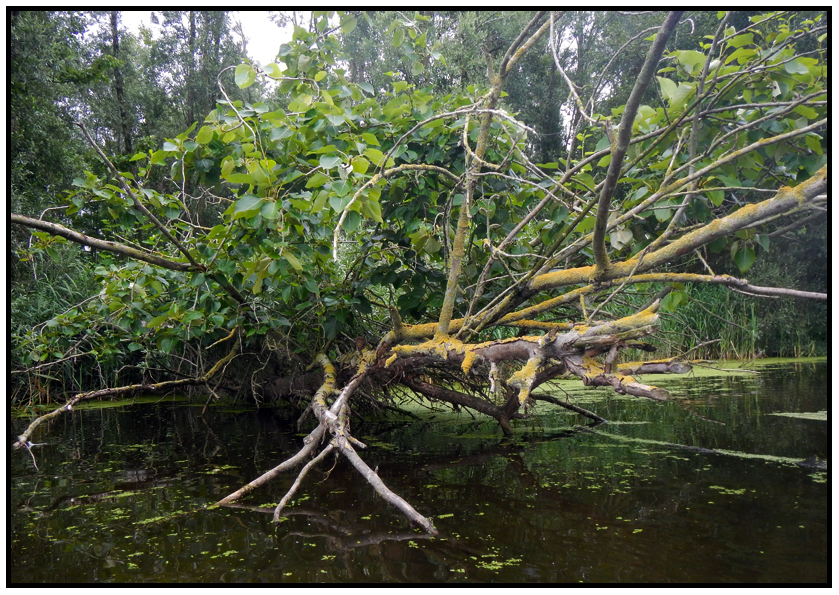
It was significantly cooler today. We decided to go on a little adventure with our inflatable dinghy, so we set out to explore the smaller creeks that are branching away from the main channel. We paddled through the high reeds, under overhanging mossy trees and over shallows where we could see the fish swim amongst the water plants. The perspective from the small dinghy is so different than from our boat. You’re much closer to the surface, enabling you to see all the little details like the dragonflies hovering above the water, the flowers on the embankment and the waving water plants underneath the boat. It feels like you’re really immersed in nature. Slowly we drifted on the current through the beautiful landscape. Nothing to be heard but the sound of singing birds. It truly was a memorable journey.