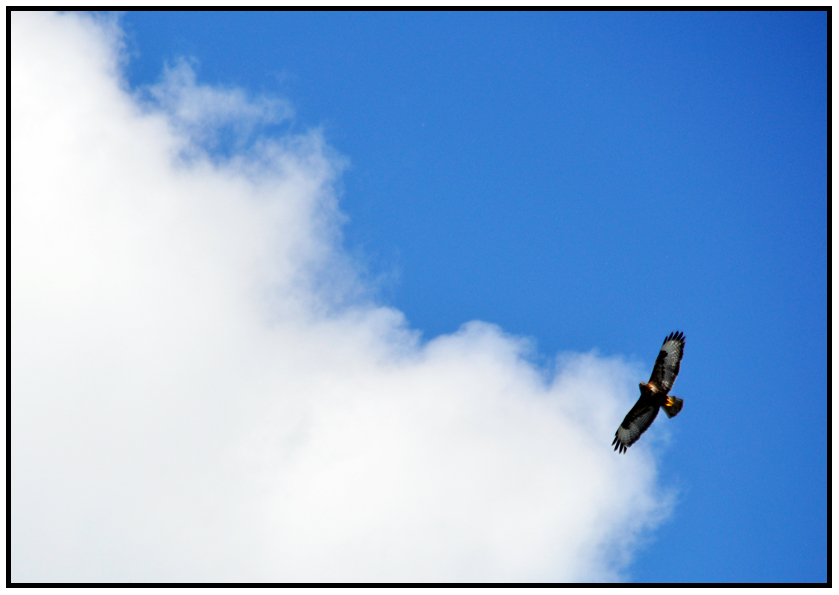
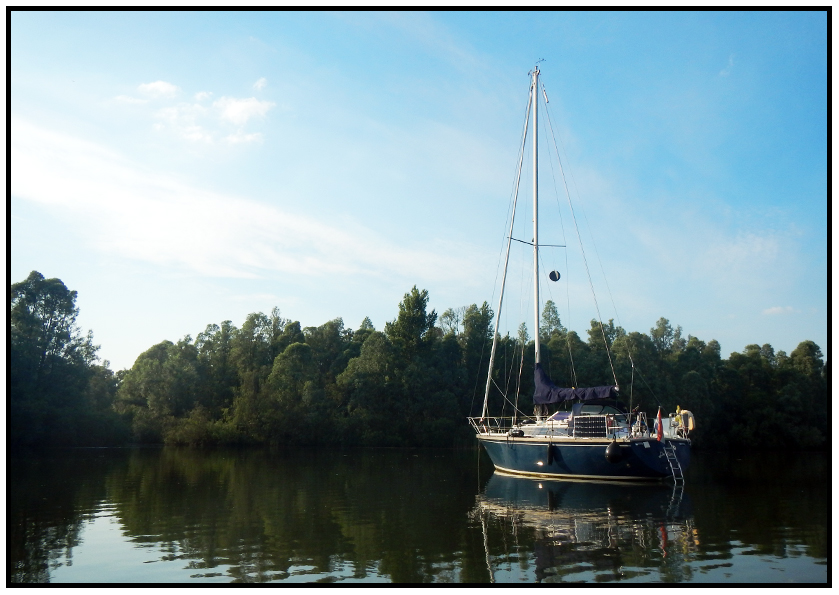
This is how we pictured being anchored somewhere: beautiful scenery, singing birds, and warm and sunny weather. Suddenly this idyllic picture was brutally disturbed by the approach of a very big tow boat coming up the channel. We weren’t aware of the fact that professional traffic was using this channel. On the internet all you can find about this channel is that it’s an anchorage, not something that sees a lot of passing traffic. There was enough space for the tow boat to pass between us and the buoy, but it felt way too close. So after it had passed we decided to move the boat closer to shore after all. We lifted the anchor, and moored again closer to the embankment. Now we have more space between us and the buoy, and we have a better view of all the wildlife on shore.
After the relocation we started with the construction of a sort of lazy jack for our main sail. For this we needed to get ropes through the eyes in the spreaders halfway up. Jeroen went up the mast this time to overcome his high anxiety. We spent a good deal of the day getting it right, but still the sail wouldn’t collapse smoothly in the lazy jack. Maybe some grease might will do the trick? Yes, that sort of helped a bit. It’s still not perfect, but good enough for now. It was getting too warm to continue working anyway.
Perhaps it’s time to play around on the water with our inflatable boat? Our poor dinghy had deflated a bit overnight. Apparently the repairs we had done before we left Stellendam hadn’t worked. The boat was still leaking. We couldn’t find another leak, and pumped it up again. It doesn’t deflate immediately so we can still use it for now. But we probably have to buy another one and say goodbye to our little floating friend.
We woke to the sounds of birds singing. We slept like a rose, the first time at anchor we have slept so soundly. It was a lovely sunny day, and at 8 in the morning already warm enough to have breakfast in the cockpit. All the people that were anchored here yesterday had left this morning, leaving us all alone in our small paradise.
The frog is returning home to the other bank from its choir practice yesterday
Anxious to explore our beautiful surroundings, we blew up the inflatable dinghy and hopped in. The IJsseloog is a round island with a small channel running through it like a crescent moon. We were anchored at the north entrance of the channel, so we set out to see if there was an even more idyllic spot to anchor at the south entrance. It turned out the island wasn’t so big at all, and before we knew it we had come to the south end of the channel. No need to move the boat, our spot is by far the most beautiful.
However there was another reason to move. We were anchored slightly far from the embankment, and we felt we posed a bit obtrusion to possible traffic. But when we were rowing back to our boat from the south end of the channel we saw that there was a good 30 meters width from our stern to the buoy that marked the the channel. Enough space left for boats to pass. And we were hesitant to move closer to the embankment, in fear we might run aground again. We tried to check the depth with our inflatable boat, and it was possible to move a smidgen towards the shore. But should we relocate just for just a few meters? The anchor was set firmly and if we would relocate it would take a few hours again to be sure that it would hold. After a lot of indecisiveness we decided to stay put, at least for now. Besides, it was very warm, and rowing is a very physical exercise. The water looked more attractive by the minute, maybe it’s warm enough to swim? Jeroen befell the honour of the first dive of the year, and declared the temperature “very refreshing”.
Enkhuizen Oosterhaven to anchorage IJsseloog: 21,6 nautical miles
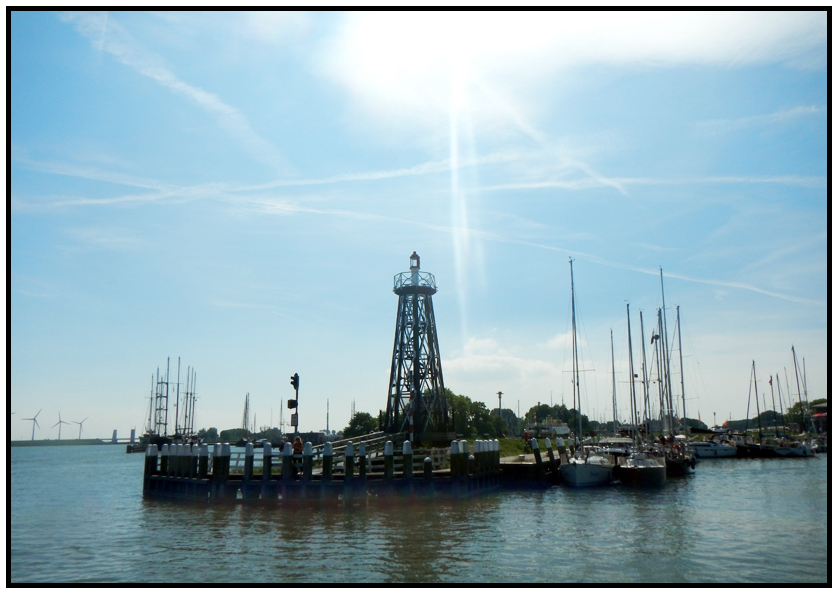
It is time to leave. Water tank all filled up, everything secured, okay…off we go. We hailed the harbour master that we were about to leave and asked him if he would be so kind to open the bridge for us. “Are you wearing your glasses this time?” he answered. Hmmm…apparently it is still the running gag.
We’re never quick to leave, and it was already past one o’clock in the afternoon. We wanted to sail to the IJsseloog, what is famed to be the most beautiful anchorage in the Netherlands. But according to our navigation app it’s almost 6 hours sailing, so maybe it’s already running a bit late to make that passage.
We decided to see if there was an empty spot to anchor at the Zuiderzee Museum where we had anchored a week ago, and leave early tomorrow morning. So we turned to port right after we left the municipality marina, to enter the sheltered anchorage near the museum. It was a bit crowded, but it seemed like there was still a spot where we would be able to squeeze in. It was quite shallow but just do-able, so we dropped the anchor, let out more chain and slowly moved backwards. When the anchor had dug itself in, we surveyed our location. We were too close to the boat behind us, at least in our opinion. The guys on the boat didn’t even bother to look up. No…definitely too close, so we hoisted the anchor again and went in search for another spot. The only other spot left available was really too shallow for us. Apparently the universe thinks it’s time to leave Enkhuizen. It is saying “Leave now or stay forever!”.
We decided to go to the IJsseloog anyway despite the fact that in the meantime it was already was 2 o’clock in the afternoon. We could always find refuge in Urk we reasoned, which would shorten the trip with 2 hours. But the wind was stronger than forecasted thus the passage also was swifter then we had anticipated. We were soaring along with an average speed of 5,5 knots. It was almost a downwind sail, so we didn’t even have to tack for 3 hours.
Jeroen at the helm
The only obstacle we had to negotiate before we would reach our destination was the Ketelmeer bridge. Unfortunately we had just missed the opening and had to wait for 30 minutes. We needed to lower our sails before we could pass the bridge. Heading downwind means you end up at the lee shore. That means that all the water is blown towards that side of a lake, and with these winds it was causing quite steep waves. So steep in fact, that the boat was rocking violently back and forth like a see-saw when we were heading straight into the wind to lower our sails. The nose disappeared into the waves every time the boat rocked forward. Jeroen had to hang on for dear life not to be thrown overboard when he was lowering the main sail.
Weird, once we passed the bridge the wind and the waves were gone. We initially hoisted the sails again, because we still had 90 minutes to go to before we had reached the island. But there just wasn’t any wind anymore. Only because of that one bridge we went from 6 knots to 1 knot speed. It was already 5 o’clock and we were getting tired. Since we didn’t feel like slowly bobbing forward we reluctantly started the engine.
After an hour motoring we arrived at the mooring spot at the IJsseloog. It was beautiful! Big trees, birds singing everywhere and luckily not too crowded with other boats. The IJsseloog is an artificial island in the Ketelmeer. The island functions as a depot and cleaning station for polluted silt. The depot in the middle of the island where the silt is stored is sealed thoroughly, so that no pollutants can enter the surrounding water. The outer rim of the island is designed as a recreational zone, with a protected channel where boats can anchor.
We saw a spot where we wanted to anchor. A quick peek on the navigation app assured us that it was 2,5 meters deep there, so we should be alright. But when we moved towards that spot we saw the depth rising fast to 1,4 meters! We’re stuck! Bit of wriggling and we were free again, so we quickly moved on and tried to anchor somewhat further. We dropped the anchor, slowly backed away until the anchor was set. We surveyed our surroundings and saw thick bushes of water plants below the surface. “Maybe the plants cause the depth meter to measure 1,4 meters. But isn’t that the ground we see there?” A bit of poking with the hook told us that what we saw was indeed the ground and we were stuck, again. We couldn’t even move the rudder.
We started to haul in the chain to tear ourselves loose again, which fortunately worked. Not trusting the map anymore we cautiously explored the other side of the small channel, and discovered that the depth was better there. We threw the anchor in again, and this time we had more luck.
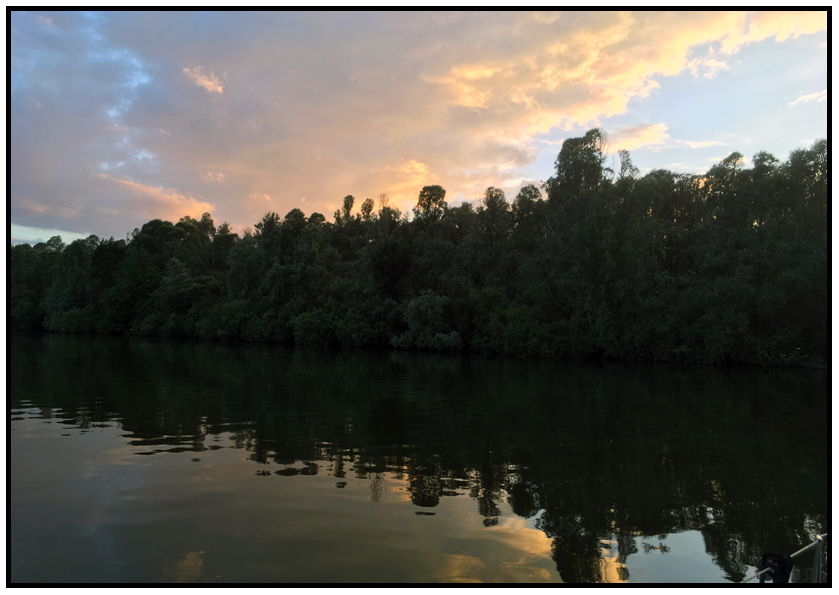
Our view on the setting sun
After a tiring day we settled down in the cockpit. The scenery is truly beautiful. It doesn’t look like we’re in the Netherlands anymore and somehow were magically transferred to a picture from a fairytale book. We spend the evening till darkness fell in the cockpit to watch the sun set with a backdrop of twittering birds and singing frogs.
Our last day in Enkhuizen. We needed to replenish our food supplies before we leave and since we were planning not to moor in a marina the coming week, that meant lots of heavy bags with groceries. We still needed to do a few minor boat chores, like fastening the iPad mount we had just bought for navigation, and gluing a piece of teak back in place that didn’t want to be part of the boat anymore.
Although the day started rainy, the sun bursted trough the clouds around noon. So when Jeroen’s mother came to visit in the afternoon, we were able to sit outside in the cockpit.
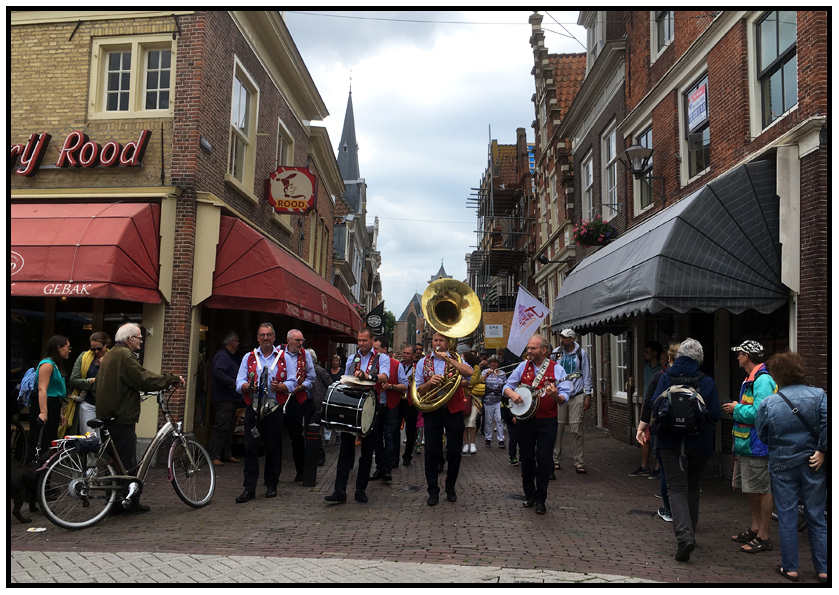
This weekend there is a big Jazz festival in Enkhuizen. There are stages with Jazz bands all through town, and parades of Dixieland orchestras playing happy tunes. So after we waved Jeroen’s mother goodbye we went for a stroll through the town to watch the festivities. When we had heard quite enough Jazz to last us a lifetime, we went for a long walk through the city. As if saying goodbye. We felt a bit sad because we’re leaving tomorrow. On the one hand we feel that it is time to go on, but we like it so much here that we don’t want to leave. But that is the essence of travelling: knowing that you have to say goodbye someday.
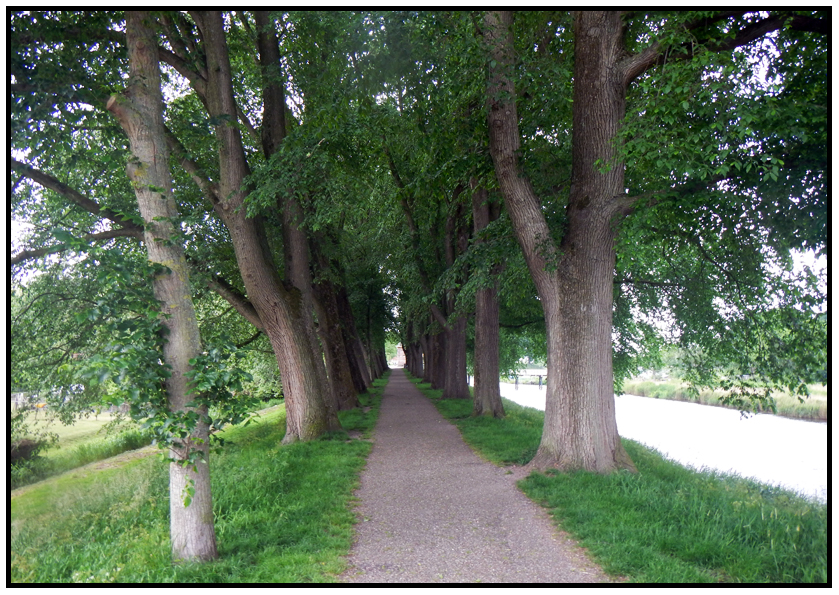
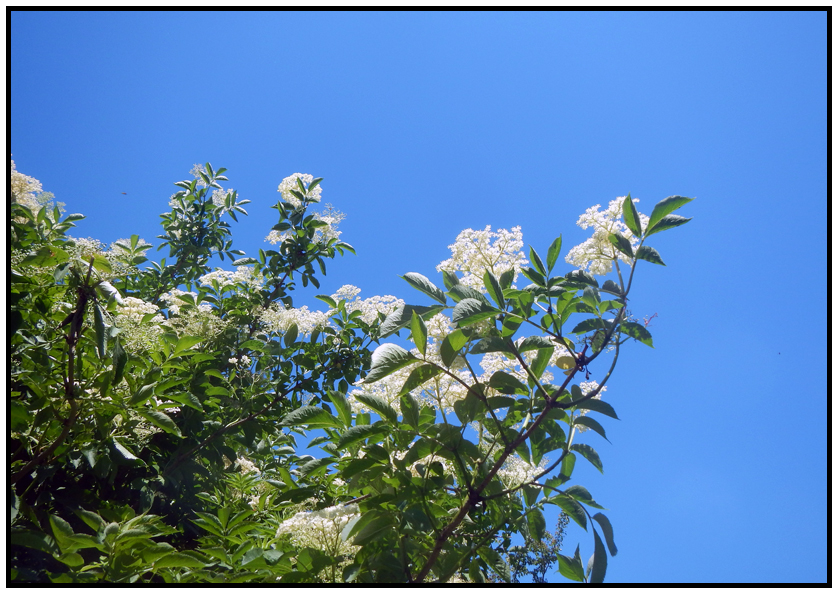
Elderflowers are the blossoms of the Elderflower shrub, and they are the key ingredient for our favourite spring beverage: Elderflower champagne. As this is the time of the year that they grow in abundance, so time to go outside and find us some flowers! The Elderflower shrub is like a weed. It grows anywhere and everywhere, so it shouldn’t be hard to find some. The winds and rain had subsided, so it was a perfect day for a walk along the cities’ ramparts.
And as we thought, we didn’t have to search long before we found loads of Elderflower shrubs laden with flowers. A quick d-tour via the supermarket for the necessary sugar and lemons, and quickly back to the boat to brew our champagne. Just add the Elderflower heads, sugar, lemons and a small splash of apple vinegar to a bucket of water and cover it loosely with a cloth. Then you have to wait a few days until it starts to ferment, and then it’s done.
The fragrance of Elderflowers is wafting through the boat, so we’re happily anticipating the brew. We just have to wait patiently for the wild yeast to do it work.
Quite strong winds today, the perfect time to plan our next passage. The past week we have tried to find suitable anchorages at the IJsselmeer. But there are not many places for us to anchor comfortably with our draft. We’ve only found about five or six spots, so maybe this is the universe telling us that after six passages it is high time to head towards the islands. The plan is to leave – and really leave, otherwise we might as well rent a permanent mooring here – on Sunday or Monday, depending on the wind.
Captain Fluffy isn’t looking forward to leave. He loves his evening walks through the city. So he went for a long walk this evening to make the most of the time ashore…
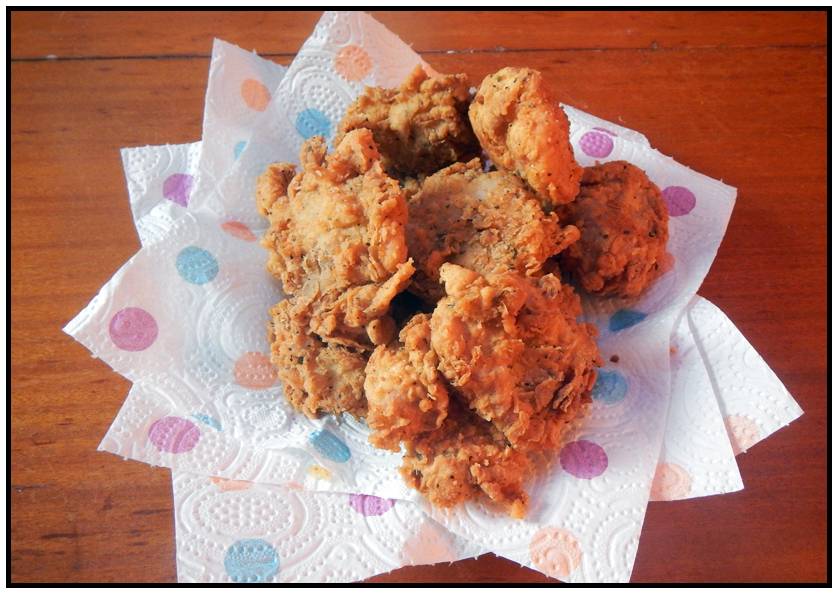
Another rainy day, the perfect weather to do some work. To fuel our energy Jeroen tried a new recipe, crispy fried chicken.
The recipe said it was supposed to taste better than those of Kentucky Fried Chicken by a guy we found on the internet who really loves his chicken, and for the record doesn’t have any Michelin Stars. And it really did taste amazing! What a difference with the Gordon Ramsey recipe. This one is going to be an all-time favourite.
We’re still in Enkhuizen. There is hardly any wind, so we wouldn’t get anywhere far by sailboat. But it’s not a punishment to stay a bit longer. Not in the slightest. We love it here.
Although the marina lies in the middle of the city, it’s peaceful and calm. Enkhuizen has a train station, the sailing area is great with direct access to the IJsselmeer and the scenery is beautiful. It really is a nice town with friendly people. Not too small like Edam, just big enough to have things to do. We’re even considering this as our permanent marina if we would ever stop travelling.
But let’s not get ahead of ourselves. We’re not planning to settle down yet. There are so many places we haven’t been to, and they might even be better than Enkhuizen, who knows…
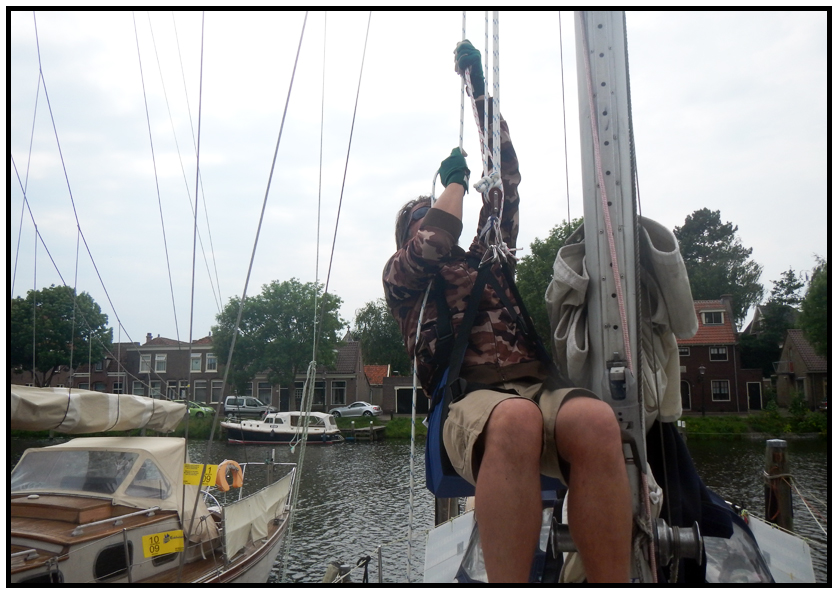
Jeroen pulling himself up in the bosun chair with the rope and pulleys
Before we could leave again there was a daunting job to be done. We had to climb the mast to fix the radar reflector. There are many ways to get up there, and except paying someone to climb up there for you, they are all equally discouraging because it means someone needs to go 13 meters up. You need a bosun chair or a climbing harness, and then connect that to something like a mainsail halyard. Some people then use a winch to haul someone up, others say it’s very dangerous to use the winch. We found a movie of a guy explaining a way to climb in your mast alone with the aid of 2 pulley blocks and a Prusik knot. You sort of pull yourself up, the weight lessened by the pulley load reduction effect, and you use the Prusik knot as a lock to prevent yourself from slipping down. We decided to give that method a try, because you can do it alone if necessary, and it looked more controlled.
We already have a bosun chair and a big carabiner to fasten it to something, only the something is missing. So to get our equipment complete, we needed to pay the local marine store a visit to buy the rope and pulley blocks. But which size of rope and pulleys to choose? After all, it’s your life dangling from the top of the mast. The guy from the marine store did a lot of work in an on sailboat masts, and was an avid climber in his spare time. He ensured us that, yes the pulley might eye a wee bit small, but it can handle four tons. That’s a teensy bit more than the average weight of a human being. To delay it trice, and thus reduce the load (our body weight) to one third, we bought rope three times times the length of the mast. The clever readers will already have spotted the error…
Back on the boat we started to fabricate the contraption. You connect one pulley to the main sail halyard, and one pulley to the bosun chair. One end of the rope is connected to the pulley near the bosun chair, than it runs to the pulley connected to the halyard. Then it runs back again to the bosun chair, back up again to the halyard, and the other end dangles down freely. That’s the end you pull yourself up with. And here we come to the error in our thinking. Because following this rationale we didn’t need a rope with three, but four times the length of the mast. Blast! Now we only had 2 lines running back and forth between the pulleys, reducing the load only in half.
We gave it a try anyway. The last thing we had to do was make a Prusik knot on the free end of the rope, and connect the loop of the Prusik knot to the carabiner that is connected to the bosun chair. Every time you pull yourself up, you slide the Prusik knot a bit higher. If you would accidentally let go of the rope, the Prusik knot fastens itself on the rope by your weight. We tested it half a meter above the deck, it works perfectly! And once you pull yourself up again, the pressure is off the knot enabling it to move.
After a few tests the dreaded moment had come. Someone had to climb the mast. Carmen has a severe fear of heights, so Jeroen volunteered to go. But three meters up he was overcome with high anxiety as well and had to descent. Despite her fear of heights Carmen decided to give it a try, with Jeroen securing the line below. And somehow she managed to climb to the top and fix the radar reflector. It is really scary to hang up there only suspended by what seems like tiny hooks and threads. The wind blows harder up there and every movement of the boat is magnified. Looking down is agony. And although the weight was reduced by the pulleys, it was still an extreme workout. Hopefully it is not something we have to do again any day soon.
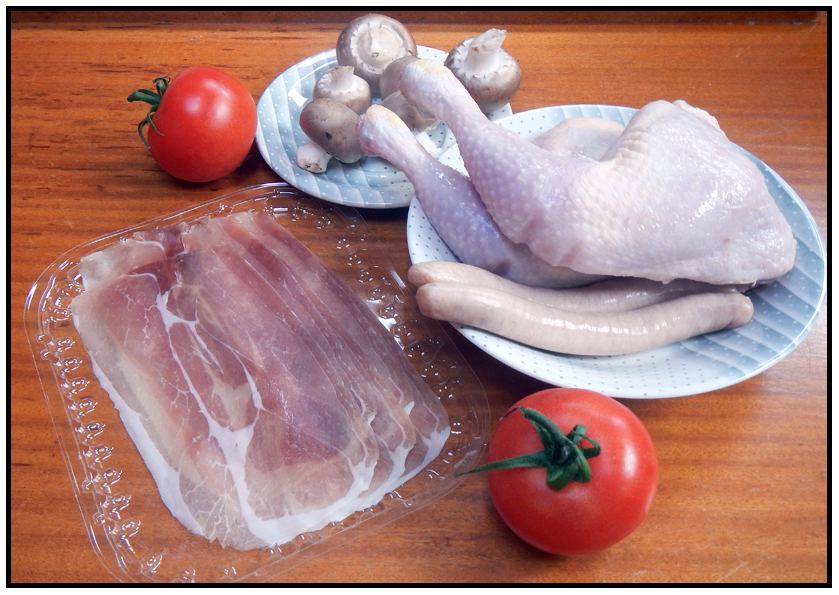
The ingredients for the special Gordon Ramsey dish
And as if nothing had happened, this morning we woke up with bright sunlight peeping through the curtains.
Jeroen had planned to make us a special dinner yesterday, but since the boat was rocking severely due to the storm, he decided to do it today. It was quite an elaborated recipe by Gordon Ramsay, the famous chef. We were watching some of his TV appearances on YouTube lately. He comes across as a very talented chef, so we were exited to try one of his recipes. Jeroen spent the better part of the day preparing and cooking the dish. There were a few hiccups during the process. In the last step you were supposed to plate the polenta, but that was the only mention of polenta in the whole recipe. No ingredients, no instructions, nothing. Fortunately we had polenta aboard, so Jeroen had to wing it and improvise a way to prepare the polenta. And the steps describing how to prepare the chicken were very confusing.
Despite all his efforts, the dish turned out to be a bit of a disappointment. Not for want of better cooking skills, but the flavour combinations were a bit boring. Hardly worth all the effort Jeroen had put into it. Not something you would expect from a chef decorated with Michelin stars.